Showing posts with label authority control. Show all posts

Tuesday, January 10, 2023

KO is KO'd

A library is intended to be a place of organized knowledge. Knowledge organization (KO) takes place in two areas: the shelf and the catalog. In this post I want to address KO in the catalog.

Headings

KO in the catalog makes use of "headings". Headings are catalog entry points, such as the title of a work or the name of an author. Library catalogs also assign topical headings to their holdings.

The "knowledge organization" of the title and author headings consists of alternate versions of those. Alternate forms can be from an unused form (Cornwell, David John Moore) to the used one (Le Carré, John). They can also refer from one form that a searcher may use (Twain, Mark) to a related name that is also to be found in the catalog (Snodgrass, Quintus Curtius).

Subject headings are a bit more complex because they also have the taxonomic relationships of broader and narrower concepts. So a broader term (Cooking) can link to a narrower term (Desserts) in the same topic area. Subject headings also have alternate terms and related terms.

The way that this KO is intended to work is that each heading and reference is entered into the catalog in alphabetical order where the user will encounter them during a search.

Cornwell, David John Moore
    see: Le Carré, John

Twain, Mark
    see also: Snodgrass, Quintus Curtius
    
Cooking
    see narrower: Desserts
    see narrower: Frying
    see narrower: Menus
    
It may seem obvious but it is still important to note that this entire system is designed around an alphabetical browse of strings of text. The user was alerted to the alternate terms and the topical structure during the browse of cards in the card catalog, where the alternate and taxonomic entries were recorded for the user to see. Any "switching" from one term to another was done by the user herself who had to walk over to another catalog drawer and look up the term, if she so chose. The KO that existed in the catalog was evident to the user.

Automation

A database of data creates the ability to search rather than browse. A database search plucks precise elements from storage in response to a query and delivers them to the questioner. The "random access" of that technology has all but eliminated the need to find information through alphabetical order. Before the database there was no retrieval in the sense that we mean today, retrieval where a user is given a finite set of results without intermediate steps on their part. Instead, yesterday's catalog users moved around in an unlimited storehouse of relevant and non-relevant materials from which they had to make choices.

In the database environment, the user does not see the KO that may be provided. Even if the system does some term-switching from unused to used terms, the searcher is given the result of a process that is not transparent. Someone searching on "Cornwell, David" will receive results for the name "John Le Carré" but no explanation of why that is the case. Less likely is that a search on "Twain, Mark" will lead the searcher to the works that Twain wrote under the additional alias of "Snodgrass, Quintus Curtius" or that the search on "Cooking" will inform the user that there is a narrower heading for "Menus." A precise retrieval provides no context for the result, and context is what knowledge organization is all about.

Answering a question is not a conversation. The card catalog engaged the user in at least a modicum of conversation as it suggested entry headings other than the ones being browsed. It is even plausible that some learning took place as the user was guided from one place in the list to another. None of that is intended or provided with the database search.

KW is especially not KO

The loss of KO is exacerbated with keyword searching. While one might be able to link a reference to a single-word topic or to a particular phrase, such as "cookery" to "cooking," individual words that can appear anywhere in a heading are even further removed from any informational context. A word like "solar" ("solar oscillations", "solar cars", "orbiting solar observatories") or "management" ("wildlife management", "time management", "library catalog management") is virtually useless on its own, and the items retrieved will be from significantly different topic areas.

Keyword searching is very popular because, as one computer science student once told me, "I always get something." The controversy today over mis-information is around the fact that "something" is a context-free deliverable. In libraries, keyword searching helps users retrieve items with complex headings, but the resulting resources may be so different one from the other that the the retrieved set resembles a random selection from the catalog. Note, too, that even the sophisticated search engines are unable to inform their users that broader and narrower topics exist, nor can they translate from words to topics. Words are tools to express knowledge, but keywords are only fragments of knowledge.

21st Century Goals

I would like to suggest a goal for 21st century librarians, and that is a return to knowledge organization. I don't know how it can be done, but it is essential to provide this as a service to library users who are poorly served by the contextless searches in today's library catalogs. To accomplish this with computer and database technology will probably not make use of the technique of heading assignment of the card catalog. Users might enter the library through a topic map of some type, perhaps. I really don't know. I do know that educating users will be a big hurdle; the facility of typing a few words and getting "something" will be hard to overcome in a world where quick bits of information are not only the norm but all that some generations have ever known. A knowledge system has to be demonstrably better, and that's a tall order.

Wednesday, January 26, 2022

What's in a Name?

This is an essay about the forms of names and their representation in metadata. It is not by any means complete, nor am I an expert in this very complex area. These are my observations and a few suggestions for future work. All comments welcome.

[Because this is huge, and printing from here is oddly difficult, here's a PDF.]

If you do anything online, and surely you do, you have filled in countless forms with your name and address. Within the Western and English-speaking world, these have some minor (and occasionally annoying) variations. You might be asked for a first name and last name, or a given name and a family name, or just a name in a particular order.


There are variations, of course. Some recognize the practice of giving a person a "middle" name, that is a second, and perhaps secondary, additional name.

Because these forms are often used in commercial sites and the companies wish to have a polite relationship with their customers, you might be asked about your preferred form of address. 

These forms of address have cultural significance, and the list itself can reveal quite a bit about a culture. This is the list from the British Airways site:

We'll come back to some of these below.

The above examples come from commerce sites. The use of names at those sites are mostly social. Even on a site like a bank, the name has only a minor role in regards to identification because security relies on user names, passwords, and two-factor identification. Names themselves are  poor identifiers because they are far from unique across a population. Even if you think you have an unusual name, you will find others with your name in the vastness of the Internet.*

If you think about times that you've been on the phone with some bank or service, they invariably ask you to provide a telephone number, an email address, or a unique identifier like a social security number as a way to identify you. Only after they have located a record with that identifier do they use your name as both a confirmation that you've given (and they've entered) the correct number, but also so that they can cheerily refer to you by your name.

Names in Cultural Heritage

Where commercial organizations use names to effect a relationship with their current customers, cultural heritage institutions have a different set of needs. They often cover not only names of modern persons but persons worldwide and of previous eras. An organization must be able to encode this full range of names in a way that is useful today but that is, to the extent possible, faithful to the cultural and historical context of the person. Royalty, religious figures, even characters in mythology all have a very tender place in their respective cultures. To treat them otherwise is to dismiss their cultural importance. You wouldn't want to provide metadata for Benedict XVI without also including that his title and his role in the church is "Pope". You most certainly would not simply name him "Joseph Ratzinger" unless you were giving a very specific, pre-Pope, context.  I don't know what name Queen Elizabeth II would provide when signing up for an Amazon account ("Elizabeth Windsor"?) as there is unlikely to be an input box appropriate for her royal name, but culturally and historically she is Elizabeth II, Queen of Great Britain.

There is also the question of giving people their due rank in whatever hierarchy the particular culture values. As you can see with the example above for the list of the titles offered by British Airlines, whereas US-based airlines limit the titles to Mr., Mrs., Ms. and Dr., that titles of nobility are important in the UK. We can presume that to "mis-title" a person would be a social faux pas in most cultures, but there is also a historical context included in titles that one would not want to lose.

The "firstname, lastname" Problem

Not all names fit the "firstname, lastname" model. A primary reason to identify these parts of names is to support displays in alphabetical order by the "last name". This assumes that the last name is a family name, and that common usage is to gather together all persons with that family name in a display. In reality, this singular "family name" is only one possible name pattern. 

As the term "family name" implies, this positions a person within a group of persons with a particular relationship. In the dominant Western world, the name is paternal and denotes a line of inheritance. But this is by no means the only name pattern that exists. There are cultures where the child's name includes the family names of both the mother and the father, and sometimes other ancestors in the family line. This is how Juan Rodríguez y García-Lozano and María de la Purificación Zapatero Valero, have a son named José Luis Rodríguez Zapatero. Treating "Rodríguez Zapatero" as the family name would not bring together the alphabetical entries of the father and son.

There are other cultures that have a given name and a patronymic. While a patronymic may look like a family name, it is not. The singer Björk may have seemed to be using a single name as part of her art, like Cher or Madonna, but in fact in the Icelandic culture persons are known by a single name. When a more precise designation is needed, that name is enhanced with a name based on the given name of their father. In this case, Björk has a more "official" name of Björk Guðmundsdóttir, which is "Björk daughter of Guðmundur". Her father's name was Guðmundur Gunnarsson, he being the son of Gunnar. The author Arnaldur Indriðason is "Arnaldur the son of Indriði." In this practice, creating an order based on the patronymic would result in just a jumble of individual parental names, and persons are almost always called solely by their "first-and-only" name.

Yet another exception to the firstname/lastname conundrum relates to the names of royalty as mentioned above. Charles, Prince of Wales is the son of Elizabeth II. Their names do not connect them which is somewhat ironic given how important family relationships are to royal lineage. Both are of the house of Windsor but you wouldn't know that from their names. Like a Pope, the cultural or political position in these cases outweighs the personal. In addition, the title by which someone is officially known can change over time, making identification even more confusing, with titles being inherited or bestowed as circumstances change. Some people hold a plethora of titles: in addition to Prince of Wales, Charles is Earl of Chester, Duke of Cornwall, Duke of Rothesay, Earl of Merioneth and Baron Greenwich. This is as bad as the name proliferation in Russian novels, and just as confusing.

And there are the "one name" instances.  We have historical figures with only a single name ("Homer", "Aesop") but there are also current cultures in which members have only one name.


Any metadata that strictly requires both a given name and a family name will be unable to accommodate these and it is not unusual for people with only one name to be required to provide a second name to conform to the given/family name expectation in other cultures. There may even be local traditions for how one invents such a name. Yet they would not use that invented name in their own home country.

Names and Language

It is hard to separate language from culture, but there are some name situations in which the name is translated into the "receiving" language. Catherine (the Great) is Catherine in French, Caterina in Italian, etc.  The same is true of Popes:

Papa Franciscus (Latin)

Papa Francesco (Italian)

Papa Francisco (Spanish)

Pope Francis (English)

Another twist is that scientists and other cognoscenti of the late medieval and early modern times communicated with each other in Latin, and, probably as a form of showing that they were members of this elite club, often converted their names to a Latin form. Thus, one Aldo Pio Manuzio, a Venetian scholar and a very early book printer, took the name Aldus Pius Manutius. Francis Bacon published his "Novum Organum" (which was in Latin) as "Franciscus Baconis". 

Things get doubly complex as people and their names move from one culture to another. Many people of Chinese origin reverse the order of their names from family name first then given name to the preferred order in Western countries that places the family name last. In some cases, as with science fiction author Liu Cixin, a change for the Western marketplace creates a bit of confusion for anyone wanting to correctly encode this Chinese name.
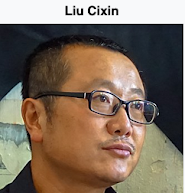

Note that his translator, Ken Liu, an American, uses the Western form of his own name. So this book cover is a good illustration of the name problem across cultures.

Names in Metadata

How we handle names in metadata design depends mainly on the intended application functions for the data. I give below some key functions that use names, but this is an incomplete list. I can see these four as key purposes for names and their encoding in metadata:

1. Display - Names get displayed in a number of different contexts, from phone books to faculty listings on a web site to conference name tags. Displays may use all or only part of a name, and there are a variety of ways that one can order the name parts.

2. Disambiguation - Which Mary Jones is this? How do I identify and find the one that I am looking for?

3. Addressing - We do want to address people appropriately, and we also want to talk about them appropriately.

4. Finding - Searching via keyword is without context, so I'll assume that all name forms can be searched in that way. I will describe "finding" as meaning a search for a specific, known name.

I'll trace these through some metadata schemas to illustrate the metadata capabilities one might have.

Library of Congress (and other libraries)

Libraries have been dealing with names and name forms for, well, forever; as long as there have been libraries. The set of rules for determining what name to enter for someone in the library catalog is many, many tens of pages long, and there are separate rules for personal names, corporate names, and family names. Yet library name practices have their limitations, in particular that names are entered as strings that are to be used to create a specific alphabetical sort order that begins with the surname, followed by a comma, and then the forename(s). 

Dempsey, Martin, 1904-
Dempsey, Martin E.
Dempsey, Mary.
Dempsey, Mary A.

Display by family name works well for Western names with family names, but not for Eastern names that place the family name first.

  Mao, Zedong

Following Chinese name practice his name would naturally be given as "Mao Zedong" because the family name is always given first. If one attempts to use the comma to revert names to their natural order, say from "Smith, Jane" to "Jane Smith" then you would also end up with "Zedong Mao" which is not correct in that cultural context. A culturally sensitive "natural order" display is not supported by this metadata. 

The primary display form is the Western one of lastname-comma-first names, but there are exceptions for entry by forename, which is given specific coding: 

Arnaldur Indriðason, 1961-
Homer

As I've shown in the Mao Zedong example, the encoding of name parts in library data does not provide what you might need to create other display forms. In the case of Arnaldur Indriðason, outside of the library need to alphabetize its entries, you may want to know that  Indriðason is a patronymic if you intend to use the name to address the person as he would be addressed in his culture. The example of "Mao, Zedong" is lacking the information that this is a name in a culture that regularly refers to people with their surname preceding their given name (and without a comma). You would want to know that this should be rendered as "Mao Zedong" when used in that context. 

As you can see in the examples above, the Library of Congress name practice goes beyond just the name and adds elements that are meant to inform and clarify. It includes dates (birth, death); titles and other terms associated with a name (Pope, Jr., illustrator); enumeration (II); and fuller form of the name, which fills in portions of the name that use initials ("Boyle, Timothy D. (Timothy Dale)").  Interestingly, the "III" in Pope Pius III is an enumeration, while the "III" in "John R Kennedy, III" is an "other term associated with a name." I'm going to guess that this primarily relates to the positioning of the "III" in the display. This illustrates a tension between identifying parts of the name and providing the desired display of those parts.

There is a another problem with "title and other terms" because it is a catchall element that doesn't distinguish between some very different types of data. The documentation lists:

  • titles designating rank, office, or nobility, e.g., Sir
  • terms of address, e.g., Mrs.
  • initials of an academic degree or denoting membership in an organization, e.g., F.L.A. 
  • a roman numeral used with a surname
  • other words or phrases associated with the name, e.g., clockmaker, Saint.

As you can see, some of these would display before the name in a "natural order" display:

  • Sir Paul McCartney
  • Mrs. Harriet Ward

While others display afterward:

  • John Kennedy, Jr.
  • John Kennedy, III

 And some can be either or both:

  • Dr. Paul Johnson, DDS
  • Dr. Sophie Jones, Ph.D., F.I.P.A.

There is always the need to disambiguate between people with the same name. Some of these "other terms"  work well in identifying a person:

Boyle, Tom (Professor)

Boyle, Tom (Spiritualist)

However, the clarification between identical names used most often in library name data is the dates of birth and death. These used to be included only when necessary to distinguish between identical names but the information is now included whenever it is available to the cataloger. This makes the dates an integral part of the name, much as the roman numerals of the names of Popes. 

Pius I, Pope, d. ca. 154 

Pius II, Pope, 1405-1464

Although perhaps once useful for the purpose of distinguishing otherwise identical names, the sheer number of people who are included in library catalogs has greatly limited the utility of these dates for disambiguation.

Kennedy, John, 1919-1945
Kennedy, John, 1921-
Kennedy, John, 1926-1994
Kennedy, John, 1928-
Kennedy, John, 1931-
Kennedy, John, 1931-2004
Kennedy, John, 1934-2012
Kennedy, John, 1939-
Kennedy, John, 1940-
Kennedy, John, 1947-
Kennedy, John, 1948-
Kennedy, John, 1951-
Kennedy, John, 1953-
Kennedy, John, 1956-
Kennedy, John, 1959-
Kennedy, John, 1963-
Kennedy, John, 1965-
Kennedy, John, 1973-
Kennedy, John, -1988.

There is provision for alternate versions of names in library practice although these reside in a separate file and are not always linked to the primary name in library databases.

Boyle, Thomas John
    see: Boyle, T. C. 

The library name practices, although probably the most detailed of any metadata name schemes, are not very generalizable; they serve one designated application, which is the alphabetical order of the entries in the library catalog. 

Dublin Core

Dublin Core is absolutely minimal when it comes to names, as "core" implies. It provides only one property, dct:creator, without further detail. It also does not distinguish between persons and organizations: both can be coded as "creator" with an implicit class of Agent. Any further intelligence must be provided elsewhere in a metadata scheme that makes use of Dublin Core.

Dublin Core does allow for the value of the dct:creator property to be either a literal or an IRI or Bnode, and the encoding of the value of the IRI could be a more precise name form. Using an IRI could also be a method for providing a unique identity for the creator.

FOAF

The "Friend of a Friend" vocabulary is about people, their names, and some modern social connectivity: email address, web site, etc. FOAF has three name properties:

  • foaf:name - which can be used to an entire name, undifferentiated in terms of types of name
  • foaf:familyName & foaf:givenName - intended to be used together (but with no mechanism to enforce that) this allows an obvious separation between the names. How they would display is left to the applications that make use of them. 

The  foaf:familyName and foaf:givenName cover a limited set of name forms. In the context of many online sites this may suffice, especially where there is no enforcement of "real" names. Given that FOAF was developed for use within and between online social sites, it avoids the need for historical forms of names.

All of these are defined as taking literal values, which we know does not provide an unambiguous identity for a person. There are properties defined in FOAF under the "Social Web" rubric, such as an email address, that should serve to disambiguate persons in a particular social context. These are not, however, part of the name itself.

schema.org

The vocabulary schema.org was developed to provide "structured data on the Internet". (This is exactly the original impetus behind Dublin Core. How that went south, and what schema.org attempts to do instead, is beyond this post.) The vocabulary listed under the person schema is extensive, although only a few elements are directly related to names:

sdo:familyName, sdo:givenName, sdo:additionalName

sdo:givenName, is defined as the "first name" and sdo:familyName, is defined as the "last name". sdo:additionalName, is "An additional name for a Person, can be used for a middle name".  This latter is highly flexible but at the same time non-specific. It also creates some confusion in terms of the order of names for anyone whose name does not fit the exact "first-middle-last" pattern. As shown above, it's not totally uncommon to have more than one name that can fit into any of those particular buckets. Presumably the properties are repeatable, but they are defined with the singular term "name". It also does not clarify a display order. 

sdo:givenName "T."
sdo:familyName "Boyle"
sdo:additionalName "C."

Schema.org does have properties for both pre-name and post-name honorifics. The examples given for these are: sdo:honorificPrefix (Dr., Mrs.); sdo:honorificSuffix (M.D., PhD).  These examples don't make it clear if it might be possible to encode:

sdo:givenName "Charles"
sdo:honorificSuffix "Prince of Wales"

or

sdo:givenName "Pius"
sdo:honorificPrefix "Pope"
sdo:honorificSuffix "II"

In any case it appears that this would not distinguish between the informal honorifics like "Esq." and those that are essential parts of the name such as titles of nobility. There also does not seem to be an obvious way to encode non-honorific suffixes, such as "Jr." or "III". 

Without some strong guidance, it would be hard to know which of these properties would be used for the parts of a name like María de la Purificación Zapatero Valero. We'll see a possible solution to this with Wikidata, below.

Wikipedia

Wikipedia has probably millions of articles for people and therefore has to deal with the question of names. Their search does not distinguish between names and other article topics, and all are searched in left-to-right natural order in a drop-down box. Names are article titles just as any topic can be an article title.

There is no special coding of the name or parts of the name - it is simply a string of characters. Where more than one person has the same name article creators must add something to disambiguate the name which is usually done by adding an area of activity and perhaps a location associated with that activity:


Wikipedia also has a special type of page where topics that have common terms, including names, can be further defined.

 
These pages allow an explanation to distinguish between people who share a name. It goes beyond the parenthetical phrases that are used to create unique article names for persons with the same name, and is much more human-friendly than the birth and death dates that library cataloging relies on. Yet while Wikipedia excels in disambiguation, its encoding for names is limited to a single property, "name", in the infobox for a person, although it also allows for honorifics and for alternative forms of the name. 
 

Because the various Wikipedias are divided by language, there are properties for translations and transliterations of names, and it allows for name changes over the course of a person's life. 

Wikidata

Wikidata began by extracting data points from the Wikipedia entries, primarily from the infoboxes, but has grown beyond that to a database of facts that is edited directly. Perhaps because it is massively crowd-sourced, a long list of name properties have been developed. In addition to the usual given name and family name  there are terms like demonym (a name representing a place), second family name in Spanish name, Roman cognomen (ancient surname), patronym or matronym (names representing the person's father or mother), first family name in Portuguese name, and many others. 

Also because it is crowd-sourced there should be no expectation that this list is complete or balanced. It most likely represents a modicum of self-interest on the part of participants.

Conclusion (?)

Any solution in this area needs to recognize that one size does not fit all. For some applications a single "name=[string]" will be sufficient and it would be seriously counter-productive to force those folks to engage in detailed encoding. Another barrier to detailed encoding is that few people have knowledge to encode the universe of name forms at a detailed level. Requiring metadata creators to make distinctions outside of their understanding would only result in error-ridden metadata. Better a blind single string than mis-coded details. Yet there will be applications and their metadata communities that can or must make use of the subtleties of name details that are not of interest to others.

Because of both the great variety of name forms and the variability of applications that make use of names, I recommend a metadata vocabulary that follows the principle of minimum semantic commitment. This means a vocabulary that includes broad classes and properties that can be used as is where detailed coding is not needed or desired, but which can be extended to accommodate many different contexts.

The trick then is to define broad classes that aid in defining semantics but do little restriction. Classes for things like "Agent", with subclasses for "Person", "Groups of Persons", and perhaps "Non-persons". Properties could begin with "name" which could be subdivided into any definable part of a name that people find useful. Further specificity can be provided by application profiles that define such requirements as cardinality or value types for the various properties. Applications themselves could contain rules for the displays that are needed for their use cases.

The challenge now is to find a standards group that is interested to take this on.

-------

* With perhaps a few exceptions. I once heard Lorcan Dempsey opine that person's names would be much more useful if parents would just give their children unique names, "... like Lorcan Dempsey."


Friday, April 06, 2012

VIAF gets serious

There has been an announcement by OCLC that the Virtual International Authority File (VIAF) is "transitioning" to OCLC. Since it was already being run by OCLC, this may seem like no news, but in fact it is a sign of commitment on OCLC's part both to VIAF and to linked data. The announcement states:
The change has been made to assure that VIAF will be well-positioned to scale efficiently as a long-term, cooperative activity. The transition also assures that http://viaf.org will continue to have appropriate infrastructure to respond to rising levels of traffic as VIAF gains momentum and popularity as a resource for library authority work and linked data activities.
 One of the many advantages of linked data is that you can role out your implementation of linked data gradually. This announcement about VIAF leads me to wonder if library linked data can't begin with names, followed perhaps closely by subject lists. The question then becomes how we can link from name data on the web to library catalogs. There are already links from VIAF to Wikipedia, Wikipedia to VIAF. This means that there are also links from DBPedia to VIAF, since DBPedia is a linked data form of Wikipedia. DBPedia is the center point of the linked data cloud, thus assuring maximum linking. After that, we reach a dead end, at least as far as library data is concerned, because many library systems do not make use of the authority file identifiers for names, and none, as far as I know, support the use of URIs as identifiers. We would need to pass through VIAF to get the appropriate text string to match against library data.

As for subject access, there are a number of library subject heading lists that have been coded in SKOS and that have some interlinking. The ones I know about are:
These can be found at the Data Hub under the "Bibliographic" group.

(I should mention that VIAF is being licensed as ODC-BY, meaning even commercial use is allowed. What isn't immediately clear is whether the 'BY' -- that is, attribution -- applies to the service as a whole or to individual records or even to individual headings. Attribution adds a small but significant burden on downstream users, so it would be great if the only requirement were that one acknowledge VIAF in appropriate documentation.)

Ideas on how to proceed from this point are very welcome.

Friday, March 06, 2009

Un-uniform titles

The Open Library will soon be revealing its first attempt to bring together all of the many published books that represent the same work. It's been a fascinating exercise; sometimes very satisfying and other times terribly frustrating. If I hadn't already been convinced that we will need to change our data practices if we want to implement FRBR, this experience would have convinced me.

One of the problems that we ran into was one that Thom Hickey at OCLC had already reported in his blog post: that uniform titles (MARC 240) are both necessary for the identification of works, and a hindrance. The uniform title, which is being called the 'work title' in RDA (see Chapter 6) actually serves two (possibly three) different functions, and unfortunately this is not being fixed in RDA.

The first function of the work title is to bring together the different expressions of a work. This is mostly obvious for works that have been issued with different titles (the various Hamlets over time) and for works that have been translated (which also includes Hamlet). In this case, the work gets a 'work title' that is unifying, and this work title helps create work views in bibliographic databases.
Shakespeare, William, 1564-1616
Hamlet.
The tragedy of Hamlet Prince of Denmark, as is now acted by Her majesties Servants.

Shakespeare, William, 1564-1616
Hamlet.
The tragicall historie of Hamlet, Prince of Denmarke.

Shakespeare, William, 1564-1616
Hamlet.
William Shakespeare's Hamlet, Prince of Denmark.
The second function performed by the uniform title field is to give works a collective title. These are titles like 'Essays' or 'Works.' This is a title given to a grouping of works, not a single work. It's kind of a superset of works, and the same work title can be given to a different selection of an author's works. This uniform title does not help gather and display the FRBR work level, and in particular it isn't useful for user displays because the grouping title is so broad and vague. It probably would be useful as a genre for retrieval, but it's not great as an organization for works. In particular, you wouldn't want to present these to users as the same work:
Bacon, Francis, 1561-1626.
Essays
The essayes or counsels, ciuill and morall, of Francis Lo. Verulam, Viscount St. Alban

Bacon, Francis, 1561-1626.
Essays
The essaies of Sr Francis Bacon knight, the Kings Atturney Generall. His Religious meditations. Places of perswasion and disswasion. Seene and allowed
These are of the genre essays, and a genre data element is commonly used as a facet in systems that have that functionality. But the genre should not be confused with the work title, as it is here.

The function that may or may not be a third function relates to the additions to the uniform title, which really should be handled elsewhere in the record. Thus:
Hamlet. French
Hamlet. German
Hamlet. Italian
Languages and dates get all mixed in with the title of the work when the title is a 'heading' in the bibliographic record. Like the use of the uniform title for genre, systems today can provide this kind of organization, if it is desired, from data in the record, and can use it for a variety of purposes such as selection or grouping. There is absolutely no need to tack this data onto the work title now that records are no longer being placed in linear catalogs.

Note that I'm aware that I haven't expounded on the uses of uniform titles in music cataloging. The uniform titles in music cataloging are fascinating constructs for the arrangement of musical pieces, but they are not work titles. I haven't had any experience trying to create work views of music, however I'm sure that's a very interesting problem; one that I hope someone else will solve and share with the rest of us.

We need a work title if we are to follow the bibliographic concepts in FRBR. One of the big problems with the data we create today is that so many data elements are performing multiple functions that may be clear to humans but aren't coded in such a way to be clear for machine processing. That this same mistake is being made in RDA, which is supposed to be based on FRBR, shows that we still aren't designing our data for machine processing. In this day and age, that is pretty sad.

Saturday, October 20, 2007

Great Minds...

As if in response to my post on name authorities, OCLC has come up with a version of the Virtual International Authority File (acronym VIAF). Type in "Fitzgerald, Michael" and you'll see that each name has associated with it what they are calling a "sample title." The titles are unattractive, being normalized forms, but still give you some idea of what each author has written, and you might be able to sort the Michael Fitzgerald who writes on XSL from the one who has written the guide to better business letters. At this point, that authority control has already determined that these are different people is incredibly valuable, where the value was much harder to see when all you had were names and dates.

Saturday, September 29, 2007

Name authority control, aka name identification

Libraries do something they call "name authority control". For most people in IT, this would be called "assigning unique identifiers to names." Identifying authors is considered one of the essential aspects of library cataloging, and it isn't done in any other bibliographic environment, as far as I know. When a user goes to a library catalog, they will find all of the works of T.C. Boyle under a single name, even though he has variously used T.C. Boyle and T. Coraghessan Boyle on his books, and was born with the name Thomas John Boyle. Authority control puts all of his works under one name, with references from other forms of his name: TC Boyle, see: T. Coraghessan Boyle. When there are two authors with the same name, one of them (the second one to be added to the authority file, generally) is distinguished using a middle initial or the year of birth. Thus you can have
Smith, John
Smith, John 1709
Smith, John 1936
Smith, John A.

There are some problems with the current method used by libraries to realize authority control, not the least of which is that it is a difficult and expensive process and the number of authors is growing rapidly as we all become creators in this information age. I want to address here 3 aspects of name authority control that are especially non-functional: 1) the use of dates as distinguishing characteristics is not easy for the catalogers creating the authority record 2) the use of dates as distinguishing characteristics does not help the users 3) the name heading is not a legitimate identifier because it may change.

Date of Birth is Hard for Catalogers

We hear that authority control, including name authority control, is responsible for upwards to 40-50% of the time it takes to catalog a book. Part of this is in determining if you do indeed have a new author to enter into the system. Another part is in creating the unique entry. Take the case of Michael Fitzergerald, editor of a book called Touching All Bases. Touching all Bases is a collection of columns by sports writer Ray Fitzgerald. His sons, Michael and Kevin gathered the columns after their father's death in 1982 and published them. Because there have been other Michael Fitzgerald's as authors, the year of his birth had to be added to his name. Here's the authority record for Michael:

LC Control Number: n  83124260
Cancel/Invalid LCCN: n 97055382 no 90013838
HEADING: Fitzgerald, Michael, 1955-
Found In: Fitzgerald, R. Touching all bases, c1983 (a.e.) CIP t.p.
(Michael Fitzgerald)
Call to publisher, 6/27/83 (Accountant, b. 2/22/1955)

Michael Fitzgeralds seem to be in great abundance. There was even another one who wrote a book and was also born in 1955. To distinguish between them, Michael Fitzgerald 1955 #2 has his full date of birth added to his name

LC Control Number: n 2003097483
LC Class Number: PS3556.I8345
HEADING: Fitzgerald, Michael, 1955 June 11-
Found In: The Creative circle, 1989: t.p. (Michael Fitzgerald) p. 241
(teaches at Shenandoah College in Virginia)
Earth circle, c2003: CIP t.p. (Michael Fitzgerald) data
sheet (b. 06-11-55)
His book, Creative Circle, is about art, music and literature from a Baha'I perspective. We see that at the time the authority record was created he was teaching at Shenandoah College.

So here we have two authors whose works would never be mistaken for each other, yet who have the same name. The authority records are evidence of why it is so time consuming to create these identifiers. Because the date of birth is generally not one of the pieces of information about an author that is included in the book nor in the promotional material provided by publishers, the librarians establishing the name heading often must resort to contacting the publisher or the author or the author's institution to determine that information.

Date of Birth May Not Help Users

In a time when few people wrote books, and when users may have come to the library with some knowledge of the famous intellectual whose works they were seeking, the distinction between two John Smiths, one born in 1709 and one born in 1936, may have been an obvious one. We are now, however, in a time of author abundance. Anyone can, and many do, write books, and many of those writing are not known in wider circles. Reading is now considered a "popular" activity, as the bookshelves of any chain bookstore will evidence. So a user of a library catalog may find himself facing a daunting choice among authors, such as these, all named "Michael Fitzgerald":

Fitzgerald, Michael
Fitzgerald, Michael, 1768-1831
Fitzgerald, Michael, 1859-
Fitzgerald, Michael, 1918-
Fitzgerald, Michael, 1937-
Fitzgerald, Michael, 1946-
Fitzgerald, Michael, 1955-
Fitzgerald, Michael, 1955 June 11-
Fitzgerald, Michael, 1957-
Fitzgerald, Michael, 1958-
Fitzgerald, Michael, 1959-
Fitzgerald, Michael, 1970-
FitzGerald, Michael A.
etc.
The Michael Fitzgerald born June 11, 1955, will be able to find himself in this list, but other than members of his immediate family, no one else will know which of these he is. Catalogers have to call publishers or authors to find out the author's date of birth because it's not included on the book, so there is no reason to believe that the date is available to users of the library catalog. All of that time and effort is expended to create a distinction that often doesn't help the user.

All That, and It's not Even a Valid Identifier

The final blow to name authority control is that the name heading (as the name entry is called, e.g. Smith, John A.) can change. Sometimes it might change because a mistake was made in creating the heading, or even in the printing of the book, other times it changes because the library rules for creating name headings change. The heading performs multiple functions: it is the display form in displays of the book's data, it is used as the string to search on in a catalog, and it identifies the author. If a new display form is needed, then the identifier itself changes. When this happened on a grand scale a few decades ago, due to a change in the library cataloging rules, all of the connections between names and books broke, and names in library records all over the country (and beyond) had to be changed. A true identifier only identifies, and if display forms change the identifier stays the same. John Smith is the same person even if the library entry changes from Smith, John A. to Smith, John Arthur.

What Now?

It seems pretty clear that we won't be able to deal with our author abundance using the current name authority methods. There are too many new authors appearing for us to spend time calling around to determine birthdates. There are also too many new authors for those dates of birth to be useful as a way to distinguish between persons. To add to that, we really need a true identifier for authors.

Library catalogs attempt to maintain uniformity throughout, so the idea of treating contemporary authors differently from historical ones is a very disruptive concept. However, the notion is beginning to circulate that we could have contemporary authors identify themselves in some way. Something to the effect of: Yes, I am the same Michael Fitzgerald who authored that book on Art, and that's the identifier for me. After all, who better than the author knows his own identity?

That doesn't solve the problem that users have of identifying the author they seek from a long list of persons with essentially the same name. Perhaps the days of looking at lists of authors' names is over. Maybe users need to see a cloud of authors connected to topic areas in which they have published, or related to books titles or institutional affiliations. In this time of author abundance, names are not meaningful without some context.

Sunday, November 26, 2006

Authorities and Authors

I was reading through some chapters of Joanna Russ's book "How to Suppress Women's Writing," when I had some ideas about authority control. Russ's book is one that I re-read often. It speaks to more than just women's writing -- it is a general description of how the accomplishments of a non-dominant group in any society can be ignored or devalued. Russ mentions many women authors who never make the "top 100" list, or the "Anthology of [whatever] Literature." She also states that a majority of writers in the 19th century were women.

I immediately thought how it would be interesting to use a large database, such as LoC's file, or WorldCat, to retrieve authors either by gender or country of origin. It then occurred to me that this is information that we do not include in authority records, even though it is probably available in a majority of cases. I also recall -- although I cannot place -- a discussion about adding to the authority record for an author the names of all of the author's works. In this sense, the authority record would be more than a controlled form of the author's name, it would actually contain information about the author that would be of interest to catalog users. There is talk of adding links from author names in catalog records to their Wikipedia entries. Those entries are surely more of interest to users than the authority record, which is just a list of variant forms of the name. For example, look at the wikipedia entry for Joanna Russ, and compare that to the authority record for the same person.

So imagine an "author" record, either related to or in place of the authority record. It could help users understand who the author is, and to place the author in a historical period (even if the authoritative form of the name doesn't include dates). If coded well, a database of author records could provide some interesting information for various areas of study.