Showing posts with label metadata. Show all posts

Wednesday, January 26, 2022

What's in a Name?

This is an essay about the forms of names and their representation in metadata. It is not by any means complete, nor am I an expert in this very complex area. These are my observations and a few suggestions for future work. All comments welcome.

[Because this is huge, and printing from here is oddly difficult, here's a PDF.]

If you do anything online, and surely you do, you have filled in countless forms with your name and address. Within the Western and English-speaking world, these have some minor (and occasionally annoying) variations. You might be asked for a first name and last name, or a given name and a family name, or just a name in a particular order.


There are variations, of course. Some recognize the practice of giving a person a "middle" name, that is a second, and perhaps secondary, additional name.

Because these forms are often used in commercial sites and the companies wish to have a polite relationship with their customers, you might be asked about your preferred form of address. 

These forms of address have cultural significance, and the list itself can reveal quite a bit about a culture. This is the list from the British Airways site:

We'll come back to some of these below.

The above examples come from commerce sites. The use of names at those sites are mostly social. Even on a site like a bank, the name has only a minor role in regards to identification because security relies on user names, passwords, and two-factor identification. Names themselves are  poor identifiers because they are far from unique across a population. Even if you think you have an unusual name, you will find others with your name in the vastness of the Internet.*

If you think about times that you've been on the phone with some bank or service, they invariably ask you to provide a telephone number, an email address, or a unique identifier like a social security number as a way to identify you. Only after they have located a record with that identifier do they use your name as both a confirmation that you've given (and they've entered) the correct number, but also so that they can cheerily refer to you by your name.

Names in Cultural Heritage

Where commercial organizations use names to effect a relationship with their current customers, cultural heritage institutions have a different set of needs. They often cover not only names of modern persons but persons worldwide and of previous eras. An organization must be able to encode this full range of names in a way that is useful today but that is, to the extent possible, faithful to the cultural and historical context of the person. Royalty, religious figures, even characters in mythology all have a very tender place in their respective cultures. To treat them otherwise is to dismiss their cultural importance. You wouldn't want to provide metadata for Benedict XVI without also including that his title and his role in the church is "Pope". You most certainly would not simply name him "Joseph Ratzinger" unless you were giving a very specific, pre-Pope, context.  I don't know what name Queen Elizabeth II would provide when signing up for an Amazon account ("Elizabeth Windsor"?) as there is unlikely to be an input box appropriate for her royal name, but culturally and historically she is Elizabeth II, Queen of Great Britain.

There is also the question of giving people their due rank in whatever hierarchy the particular culture values. As you can see with the example above for the list of the titles offered by British Airlines, whereas US-based airlines limit the titles to Mr., Mrs., Ms. and Dr., that titles of nobility are important in the UK. We can presume that to "mis-title" a person would be a social faux pas in most cultures, but there is also a historical context included in titles that one would not want to lose.

The "firstname, lastname" Problem

Not all names fit the "firstname, lastname" model. A primary reason to identify these parts of names is to support displays in alphabetical order by the "last name". This assumes that the last name is a family name, and that common usage is to gather together all persons with that family name in a display. In reality, this singular "family name" is only one possible name pattern. 

As the term "family name" implies, this positions a person within a group of persons with a particular relationship. In the dominant Western world, the name is paternal and denotes a line of inheritance. But this is by no means the only name pattern that exists. There are cultures where the child's name includes the family names of both the mother and the father, and sometimes other ancestors in the family line. This is how Juan Rodríguez y García-Lozano and María de la Purificación Zapatero Valero, have a son named José Luis Rodríguez Zapatero. Treating "Rodríguez Zapatero" as the family name would not bring together the alphabetical entries of the father and son.

There are other cultures that have a given name and a patronymic. While a patronymic may look like a family name, it is not. The singer Björk may have seemed to be using a single name as part of her art, like Cher or Madonna, but in fact in the Icelandic culture persons are known by a single name. When a more precise designation is needed, that name is enhanced with a name based on the given name of their father. In this case, Björk has a more "official" name of Björk Guðmundsdóttir, which is "Björk daughter of Guðmundur". Her father's name was Guðmundur Gunnarsson, he being the son of Gunnar. The author Arnaldur Indriðason is "Arnaldur the son of Indriði." In this practice, creating an order based on the patronymic would result in just a jumble of individual parental names, and persons are almost always called solely by their "first-and-only" name.

Yet another exception to the firstname/lastname conundrum relates to the names of royalty as mentioned above. Charles, Prince of Wales is the son of Elizabeth II. Their names do not connect them which is somewhat ironic given how important family relationships are to royal lineage. Both are of the house of Windsor but you wouldn't know that from their names. Like a Pope, the cultural or political position in these cases outweighs the personal. In addition, the title by which someone is officially known can change over time, making identification even more confusing, with titles being inherited or bestowed as circumstances change. Some people hold a plethora of titles: in addition to Prince of Wales, Charles is Earl of Chester, Duke of Cornwall, Duke of Rothesay, Earl of Merioneth and Baron Greenwich. This is as bad as the name proliferation in Russian novels, and just as confusing.

And there are the "one name" instances.  We have historical figures with only a single name ("Homer", "Aesop") but there are also current cultures in which members have only one name.


Any metadata that strictly requires both a given name and a family name will be unable to accommodate these and it is not unusual for people with only one name to be required to provide a second name to conform to the given/family name expectation in other cultures. There may even be local traditions for how one invents such a name. Yet they would not use that invented name in their own home country.

Names and Language

It is hard to separate language from culture, but there are some name situations in which the name is translated into the "receiving" language. Catherine (the Great) is Catherine in French, Caterina in Italian, etc.  The same is true of Popes:

Papa Franciscus (Latin)

Papa Francesco (Italian)

Papa Francisco (Spanish)

Pope Francis (English)

Another twist is that scientists and other cognoscenti of the late medieval and early modern times communicated with each other in Latin, and, probably as a form of showing that they were members of this elite club, often converted their names to a Latin form. Thus, one Aldo Pio Manuzio, a Venetian scholar and a very early book printer, took the name Aldus Pius Manutius. Francis Bacon published his "Novum Organum" (which was in Latin) as "Franciscus Baconis". 

Things get doubly complex as people and their names move from one culture to another. Many people of Chinese origin reverse the order of their names from family name first then given name to the preferred order in Western countries that places the family name last. In some cases, as with science fiction author Liu Cixin, a change for the Western marketplace creates a bit of confusion for anyone wanting to correctly encode this Chinese name.
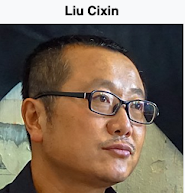

Note that his translator, Ken Liu, an American, uses the Western form of his own name. So this book cover is a good illustration of the name problem across cultures.

Names in Metadata

How we handle names in metadata design depends mainly on the intended application functions for the data. I give below some key functions that use names, but this is an incomplete list. I can see these four as key purposes for names and their encoding in metadata:

1. Display - Names get displayed in a number of different contexts, from phone books to faculty listings on a web site to conference name tags. Displays may use all or only part of a name, and there are a variety of ways that one can order the name parts.

2. Disambiguation - Which Mary Jones is this? How do I identify and find the one that I am looking for?

3. Addressing - We do want to address people appropriately, and we also want to talk about them appropriately.

4. Finding - Searching via keyword is without context, so I'll assume that all name forms can be searched in that way. I will describe "finding" as meaning a search for a specific, known name.

I'll trace these through some metadata schemas to illustrate the metadata capabilities one might have.

Library of Congress (and other libraries)

Libraries have been dealing with names and name forms for, well, forever; as long as there have been libraries. The set of rules for determining what name to enter for someone in the library catalog is many, many tens of pages long, and there are separate rules for personal names, corporate names, and family names. Yet library name practices have their limitations, in particular that names are entered as strings that are to be used to create a specific alphabetical sort order that begins with the surname, followed by a comma, and then the forename(s). 

Dempsey, Martin, 1904-
Dempsey, Martin E.
Dempsey, Mary.
Dempsey, Mary A.

Display by family name works well for Western names with family names, but not for Eastern names that place the family name first.

  Mao, Zedong

Following Chinese name practice his name would naturally be given as "Mao Zedong" because the family name is always given first. If one attempts to use the comma to revert names to their natural order, say from "Smith, Jane" to "Jane Smith" then you would also end up with "Zedong Mao" which is not correct in that cultural context. A culturally sensitive "natural order" display is not supported by this metadata. 

The primary display form is the Western one of lastname-comma-first names, but there are exceptions for entry by forename, which is given specific coding: 

Arnaldur Indriðason, 1961-
Homer

As I've shown in the Mao Zedong example, the encoding of name parts in library data does not provide what you might need to create other display forms. In the case of Arnaldur Indriðason, outside of the library need to alphabetize its entries, you may want to know that  Indriðason is a patronymic if you intend to use the name to address the person as he would be addressed in his culture. The example of "Mao, Zedong" is lacking the information that this is a name in a culture that regularly refers to people with their surname preceding their given name (and without a comma). You would want to know that this should be rendered as "Mao Zedong" when used in that context. 

As you can see in the examples above, the Library of Congress name practice goes beyond just the name and adds elements that are meant to inform and clarify. It includes dates (birth, death); titles and other terms associated with a name (Pope, Jr., illustrator); enumeration (II); and fuller form of the name, which fills in portions of the name that use initials ("Boyle, Timothy D. (Timothy Dale)").  Interestingly, the "III" in Pope Pius III is an enumeration, while the "III" in "John R Kennedy, III" is an "other term associated with a name." I'm going to guess that this primarily relates to the positioning of the "III" in the display. This illustrates a tension between identifying parts of the name and providing the desired display of those parts.

There is a another problem with "title and other terms" because it is a catchall element that doesn't distinguish between some very different types of data. The documentation lists:

  • titles designating rank, office, or nobility, e.g., Sir
  • terms of address, e.g., Mrs.
  • initials of an academic degree or denoting membership in an organization, e.g., F.L.A. 
  • a roman numeral used with a surname
  • other words or phrases associated with the name, e.g., clockmaker, Saint.

As you can see, some of these would display before the name in a "natural order" display:

  • Sir Paul McCartney
  • Mrs. Harriet Ward

While others display afterward:

  • John Kennedy, Jr.
  • John Kennedy, III

 And some can be either or both:

  • Dr. Paul Johnson, DDS
  • Dr. Sophie Jones, Ph.D., F.I.P.A.

There is always the need to disambiguate between people with the same name. Some of these "other terms"  work well in identifying a person:

Boyle, Tom (Professor)

Boyle, Tom (Spiritualist)

However, the clarification between identical names used most often in library name data is the dates of birth and death. These used to be included only when necessary to distinguish between identical names but the information is now included whenever it is available to the cataloger. This makes the dates an integral part of the name, much as the roman numerals of the names of Popes. 

Pius I, Pope, d. ca. 154 

Pius II, Pope, 1405-1464

Although perhaps once useful for the purpose of distinguishing otherwise identical names, the sheer number of people who are included in library catalogs has greatly limited the utility of these dates for disambiguation.

Kennedy, John, 1919-1945
Kennedy, John, 1921-
Kennedy, John, 1926-1994
Kennedy, John, 1928-
Kennedy, John, 1931-
Kennedy, John, 1931-2004
Kennedy, John, 1934-2012
Kennedy, John, 1939-
Kennedy, John, 1940-
Kennedy, John, 1947-
Kennedy, John, 1948-
Kennedy, John, 1951-
Kennedy, John, 1953-
Kennedy, John, 1956-
Kennedy, John, 1959-
Kennedy, John, 1963-
Kennedy, John, 1965-
Kennedy, John, 1973-
Kennedy, John, -1988.

There is provision for alternate versions of names in library practice although these reside in a separate file and are not always linked to the primary name in library databases.

Boyle, Thomas John
    see: Boyle, T. C. 

The library name practices, although probably the most detailed of any metadata name schemes, are not very generalizable; they serve one designated application, which is the alphabetical order of the entries in the library catalog. 

Dublin Core

Dublin Core is absolutely minimal when it comes to names, as "core" implies. It provides only one property, dct:creator, without further detail. It also does not distinguish between persons and organizations: both can be coded as "creator" with an implicit class of Agent. Any further intelligence must be provided elsewhere in a metadata scheme that makes use of Dublin Core.

Dublin Core does allow for the value of the dct:creator property to be either a literal or an IRI or Bnode, and the encoding of the value of the IRI could be a more precise name form. Using an IRI could also be a method for providing a unique identity for the creator.

FOAF

The "Friend of a Friend" vocabulary is about people, their names, and some modern social connectivity: email address, web site, etc. FOAF has three name properties:

  • foaf:name - which can be used to an entire name, undifferentiated in terms of types of name
  • foaf:familyName & foaf:givenName - intended to be used together (but with no mechanism to enforce that) this allows an obvious separation between the names. How they would display is left to the applications that make use of them. 

The  foaf:familyName and foaf:givenName cover a limited set of name forms. In the context of many online sites this may suffice, especially where there is no enforcement of "real" names. Given that FOAF was developed for use within and between online social sites, it avoids the need for historical forms of names.

All of these are defined as taking literal values, which we know does not provide an unambiguous identity for a person. There are properties defined in FOAF under the "Social Web" rubric, such as an email address, that should serve to disambiguate persons in a particular social context. These are not, however, part of the name itself.

schema.org

The vocabulary schema.org was developed to provide "structured data on the Internet". (This is exactly the original impetus behind Dublin Core. How that went south, and what schema.org attempts to do instead, is beyond this post.) The vocabulary listed under the person schema is extensive, although only a few elements are directly related to names:

sdo:familyName, sdo:givenName, sdo:additionalName

sdo:givenName, is defined as the "first name" and sdo:familyName, is defined as the "last name". sdo:additionalName, is "An additional name for a Person, can be used for a middle name".  This latter is highly flexible but at the same time non-specific. It also creates some confusion in terms of the order of names for anyone whose name does not fit the exact "first-middle-last" pattern. As shown above, it's not totally uncommon to have more than one name that can fit into any of those particular buckets. Presumably the properties are repeatable, but they are defined with the singular term "name". It also does not clarify a display order. 

sdo:givenName "T."
sdo:familyName "Boyle"
sdo:additionalName "C."

Schema.org does have properties for both pre-name and post-name honorifics. The examples given for these are: sdo:honorificPrefix (Dr., Mrs.); sdo:honorificSuffix (M.D., PhD).  These examples don't make it clear if it might be possible to encode:

sdo:givenName "Charles"
sdo:honorificSuffix "Prince of Wales"

or

sdo:givenName "Pius"
sdo:honorificPrefix "Pope"
sdo:honorificSuffix "II"

In any case it appears that this would not distinguish between the informal honorifics like "Esq." and those that are essential parts of the name such as titles of nobility. There also does not seem to be an obvious way to encode non-honorific suffixes, such as "Jr." or "III". 

Without some strong guidance, it would be hard to know which of these properties would be used for the parts of a name like María de la Purificación Zapatero Valero. We'll see a possible solution to this with Wikidata, below.

Wikipedia

Wikipedia has probably millions of articles for people and therefore has to deal with the question of names. Their search does not distinguish between names and other article topics, and all are searched in left-to-right natural order in a drop-down box. Names are article titles just as any topic can be an article title.

There is no special coding of the name or parts of the name - it is simply a string of characters. Where more than one person has the same name article creators must add something to disambiguate the name which is usually done by adding an area of activity and perhaps a location associated with that activity:


Wikipedia also has a special type of page where topics that have common terms, including names, can be further defined.

 
These pages allow an explanation to distinguish between people who share a name. It goes beyond the parenthetical phrases that are used to create unique article names for persons with the same name, and is much more human-friendly than the birth and death dates that library cataloging relies on. Yet while Wikipedia excels in disambiguation, its encoding for names is limited to a single property, "name", in the infobox for a person, although it also allows for honorifics and for alternative forms of the name. 
 

Because the various Wikipedias are divided by language, there are properties for translations and transliterations of names, and it allows for name changes over the course of a person's life. 

Wikidata

Wikidata began by extracting data points from the Wikipedia entries, primarily from the infoboxes, but has grown beyond that to a database of facts that is edited directly. Perhaps because it is massively crowd-sourced, a long list of name properties have been developed. In addition to the usual given name and family name  there are terms like demonym (a name representing a place), second family name in Spanish name, Roman cognomen (ancient surname), patronym or matronym (names representing the person's father or mother), first family name in Portuguese name, and many others. 

Also because it is crowd-sourced there should be no expectation that this list is complete or balanced. It most likely represents a modicum of self-interest on the part of participants.

Conclusion (?)

Any solution in this area needs to recognize that one size does not fit all. For some applications a single "name=[string]" will be sufficient and it would be seriously counter-productive to force those folks to engage in detailed encoding. Another barrier to detailed encoding is that few people have knowledge to encode the universe of name forms at a detailed level. Requiring metadata creators to make distinctions outside of their understanding would only result in error-ridden metadata. Better a blind single string than mis-coded details. Yet there will be applications and their metadata communities that can or must make use of the subtleties of name details that are not of interest to others.

Because of both the great variety of name forms and the variability of applications that make use of names, I recommend a metadata vocabulary that follows the principle of minimum semantic commitment. This means a vocabulary that includes broad classes and properties that can be used as is where detailed coding is not needed or desired, but which can be extended to accommodate many different contexts.

The trick then is to define broad classes that aid in defining semantics but do little restriction. Classes for things like "Agent", with subclasses for "Person", "Groups of Persons", and perhaps "Non-persons". Properties could begin with "name" which could be subdivided into any definable part of a name that people find useful. Further specificity can be provided by application profiles that define such requirements as cardinality or value types for the various properties. Applications themselves could contain rules for the displays that are needed for their use cases.

The challenge now is to find a standards group that is interested to take this on.

-------

* With perhaps a few exceptions. I once heard Lorcan Dempsey opine that person's names would be much more useful if parents would just give their children unique names, "... like Lorcan Dempsey."


Saturday, November 23, 2019

The Work

The word "work" generally means something brought about by human effort, and at times implies that this effort involves some level of creativity. We talk about "works of art" referring to paintings hanging on walls. The "works" of Beethoven are a large number of musical pieces that we may have heard. The "works" of Shakespeare are plays, in printed form but also performed. In these statements the "work" encompasses the whole of the thing referred to, from the intellectual content to the final presentation.

This is not the same use of the term as is found in the Library Reference Model (LRM). If you are unfamiliar with the LRM, it is the successor to FRBR (which I am assuming you have heard of) and it includes the basic concepts of work, expression, manifestation and item that were first introduced in that previous study. "Work," as used in the LRM is a concept designed for use in library cataloging data. It is narrower than the common use of the term illustrated in the previous paragraph and is defined thus:
Class: Work
Definition: An abstract notion of an artistic or intellectual creation.
In this definition the term only includes the idea of a non-corporeal conceptual entity, not the totality that would be implied in the phrase "the works of Shakespeare." That totality is described when the work is realized through an LRM-defined "expression" which in turn is produced in an LRM-defined "manifestation" with an LRM-defined "item" as its instance.* These four entities are generally referred to as a group with the acronym WEMI.

Because many in the library world are very familiar with the LRM definition of work, we have to use caution when using the word outside the specific LRM environment. In particular, we must not impose the LRM definition on uses of the work that are not intending that meaning. One should expect that the use of the LRM definition of work would be rarely found in any conversation that is not about the library cataloging model for which it was defined. However, it is harder to distinguish uses within the library world where one might expect the use to be adherent to the LRM.

To show this, I want to propose a particular use case. Let's say that a very large bibliographic database has many records of bibliographic description. The use case is that it is deemed to be easier for users to navigate that large database if they could get search results that cluster works rather than getting long lists of similar or nearly identical bibliographic items. Logically the cluster looks like this:


In data design, it will have a form something like this:


This is a great idea, and it does appear to have a similarity to the LRM definition of work: it is gathering those bibliographic entries that are judged to represent the same intellectual content. However, there are reasons why the LRM-defined work could not be used in this instance.

The first is that there is only one WEMI relationship for work, and that is from LRM work to LRM expression. Clearly the bibliographic records in this large library catalog are not LRM expressions; they are full bibliographic descriptions including, potentially, all of the entities defined in the LRM.

To this you might say: but there is expression data in the bibliographic record, so we can think of this work as linking to the expression data in that record. That leads us to the second reason: the entities of WEMI are defined as being disjoint. That means that no single "thing" can be more than one of those entities; nothing can be simultaneously a work and an expression, or any other combination of WEMI entities. So if the only link we have available in the model is from work to expression, unless we can somehow convince ourselves that the bibliographic record ONLY represents the expression (which it clearly does not since it has data elements from at least three of the LRM entities) any such link will violate the rule of disjointness.

Therefore, the work in our library system can have much in common with the conceptual definition of the LRM work, but it is not the same work entity as is defined in that model.

This brings me back to my earlier blog post with a proposal for a generalized definition of WEMI-like entities for created works.  The WEMI concepts are useful in practice, but the LRM model has some constraints that prevent some desirable uses of those entities. Providing unconstrained entities would expand the utility of the WEMI concepts both within the library community, as evidenced by the use case here, and in the non-library communities that I highlight in that previous blog post and in a slide presentation.

To be clear, "unconstrained" refers not only to the removal of the disjointness between entities, but also to allow the creation of links between the WEMI entities and non-WEMI entities, something that is not anticipated in the LRM. The work cluster of bibliographic records would need a general relationship, perhaps, as in the case of VIAF, linked through a shared cluster identifier and an entity type identifying the cluster as representing an unconstrained work.

----
* The other terms are defined in the LRM as:

Class: Expression
Definition: A realization of a single work usually in a physical form.

Class: Manifestation
Definition: The physical embodiment of one or more expressions.

Class: Item
Definition: An exemplar of a single manifestation.

Monday, January 28, 2019

FRBR without FR or BR

(This is something I started working on that turns out to be a "pulled thread" - something that keeps on unwinding the more I work on it. What's below is a summary, while I decide what to do with the longer piece.)

FRBR was developed for the specific purpose of modeling library catalog data. I give the backstory on FRBR in chapter 5 of my book, "FRBR Before and After." The most innovative aspect of FRBR was the development of a multi-entity view of creative works. Referred to as "group 1" of three groups of entities, the entities described there are Work, Expression, Manifestation, and Item (WEMI). They are aligned with specific bibliographic elements used in library catalogs, and are defined with a rigid structure: the entities are linked to each other in a single chain; the data elements are defined each as being valid for one and only one entity; all WEMI entities are disjoint.

In spite of these specifics, something in that group 1 has struck a chord for metadata designers who do not adhere to the library catalog model as described in FRBR. In fact, some mentions or uses of WEMI are not even bibliographic in nature.* This leads me to conclude that a version of WEMI that is not tied to library catalog concepts could provide an interesting core of classes for metadata that describes creative or created resources.

We already have some efforts that have stepped away from the specifics of FRBR. From 2005 there is the first RDF FRBR ontology, frbrCore, which defines the entities of FRBR and key relationships between them as RDF classes. This ontology breaks away from FRBR in that it creates super-classes that are not defined in FRBR, but it retains the disjointness between the primary entities. We also have FRBRoo which is a FRBR-ized version of the CIDOC museum metadata model. This extends the number of classes to include some that represent processes that are not in the static model of the library catalog. In addition we have FaBiO, a bibliographic ontology that uses frbrCore classes but extends the WEMI-based classes with dozens of sub-classes that represent types of works and expressions.

I conclude that there is something in the ability to describe the abstraction of work apart from the concrete item that is useful in many areas. The intermediate entities, defined in FRBR as expression and manifestation, may have a role depending on the material and the application for which the metadata is being developed. Other intermediate entities may be useful at times. But as a way to get started, we can define four entities (which are "classes" in RDF) that parallel the four group 1 entities in FRBR. I would like to give these new names to distance them from FRBR, but that may not be possible as people have already absorbed the FRBR terminology.


FRBR            /   option1 / option2
work               / idea        / creative work
expression      / creation  / realization
manifestation / object     / product
item                / instance / individual

My preferred rules for these classes are:
  • any entity can be iterative (e.g. a work of a work)
  • any entity can have relationships/links to any other entity
  • no entity has an inherent dependency on any other entity
  • any entity can be used alone or in concert with other entities
  • no entities are disjoint
  • anyone can define additional entities or subclasses   
  • individual profiles using the model may recommend or limit attributes and relationships, but the model itself will not have restrictions
This implements a a theory of ontology development known as "minimum semantic commitment." In this theory,  base vocabulary terms should be defined with as little semantics as possible, with semantics in this sense being the axiomatic semantics of RDF. An ontology whose terms have high semantic definition, such as the original FRBR, will provide fewer opportunities for re-use because uses must adhere to the tightly defined semantics in the original ontology. Less commitment in the base ontology means that there are greater opportunities for re-use; desired semantics can be defined in specific implementations through the creation of application profiles.

Given this freedom, how would people choose to describe creative works? For example, here's one possible way to describe a work of art:

work:
    title: Acrobats
    creator: Paul Klee
    genre: abstract art
    topic: acrobats
    date: 1914
item:
    size: 9 x 9
    base material: paper
    material: watercolor, pastel, ink
    color: mixed
    signed: PKlee
    dated: 1914
   
And here's a way to describe a museum store's inventory record for a print:

work:
    title: Acrobats
    creator: Paul Klee
    genre: abstract art
    topic: acrobats
    date: 1914
manifestation:
    description: 12-color archival inkjet print
    size: 24 x 36 inches
    price: $16.99
   
There is also no reason why a non-creative product couldn't use the manifestation class (which is one of the reasons that I would prefer to call it "product," which would resonate better for these potential users):

manifestation/product:
    description: dining chair
    dimensions: 26 x 23 x 21.5 inches
    weight:  21 pounds
    color: gray
    manufacturer: YEEFY
    price: $49.99
   
Here is the sum total of what this core WEMI would look like, still using the FRBR terminology:

<http://example.com/Work> rdf:type owl:Class ;
    rdfs:label "Work"@en ;
    rdfs:comment: "The creative work as abstraction."@en .

<http://example.com/Expression> rdf:type owl:Class ;
    rdfs:label "Expression"@en ;
    rdfs:comment: "The creative work as it is expressed in a potentially perceivable form."@en .

<http://example.com/Manifestation> rdf:type owl:Class ;                                                             rdfs:label "Manifestation"@en ;
    rdfs:comment: "The physical product that contains the creative work."@en .

<http://example.com/Item> rdf:type owl:Class ;
    rdfs:label "Item"@en ;
    rdfs:comment: "An instance or individual copy of the creative work."@en .

I can see communities like Dublin Core and schema.org as potential locations for these proposed classes because they represent general metadata communities, not just the GLAM world of IFLA. (I haven't approached them.) I'm open to hearing other ideas for hosting this, as well as comments on the ideas here. For it? Against it? Is there a downside?


* Examples of some "odd" references to FRBR for use in metadata for:

Tuesday, November 27, 2018

It's "academic"

We all know that writing and publishing is of great concern to those whose work is in academia; the "publish or perish" burden haunts pre-tenure educators and grant-seeking researchers. Revelations that data had been falsified in published experimental results brings great condemnation from publishers and colleagues, and yet I have a feeling that underneath it all is more than an ounce of empathy from those who are fully aware of the forces that would lead one to put ones' thumbs on the scales for the purposes of winning the academic jousting match. It is only a slight exaggeration to compare these souls to the storied gladiators whose defeat meant summary execution. From all evidence, that is how many of them experience the contest to win the ivory tower - you climb until you fall.

Research libraries and others deal in great part with the output of the academe. In many ways their practices reinforce the value judgments made on academic writing, such as having blanket orders for all works published by a list of academic presses. In spite of this, libraries have avoided making an overt statement of what is and what is not "academic." The "deciders" of academic writing are the publishers - primarily the publishers of peer-reviewed journals that decide what information does and does not become part of the record of academic achievement, but also those presses that issue scholarly monographs. Libraries are the consumers of these decisions but stop short of tagging works as "academic" or "scholarly."

The pressure on academics has only increased in recent years, primarily because of the development of "impact factors." In 1955, Eugene Garfield introduced the idea that one could create a map of scientific publishing using an index of the writings cited by other works. (Science, 1955; 122 :108–11) Garfield was interested in improving science by linking works so that one could easily find supporting documents. However, over the years the purpose of citation has evolved from a convenient link to precedents into a measure of the worth of scholars themselves in the form of the "h-index" - the measure of how often a person (not a work) has been cited. The h-index is the "lifetime home runs" statistic of the academic world. One is valued for how many times one is cited, making citations the coin of the realm, not sales of works or even readership. No one in academia could or should be measured on the same scale as a non-academic writer when it comes to print runs, reviews, or movie deals. Imagine comparing the sales figures of "Poetic Autonomy in Ancient Rome" with "The Da Vinci Code". So it matters in academia to carve out a world that is academic, and that isolates academic works such that one can do things like calculate an h-index value.

This interest in all things academic has led to a number of metadata oddities that make me uncomfortable, however. There are metadata schemas that have an academic bent that translates to a need to assert the "scholarliness" of works being given a bibliographic description. There is also an emphasis on science in these bibliographic metadata, with less acknowledgement of the publishing patterns of the humanities. My problem isn't solely with the fact that they are doing this, but in particular with how they go about it.

As an example, the metadata schema BIBO clearly has an emphasis on articles as scholarly writing; notably, it has  a publication type "academic article" but does not have a publication type for "academic book." This reflects the bias that new scientific discoveries are published as journal articles, and many scientists do not write book-length works at all. This slights the work of historians like Ann M. Blair whose book, Too Much to Know, has what I estimate to be about 1,450 "primary sources," ranging from manuscripts in Latin and German from the 1500's to modern works in a number of languages. It doesn't get much more academic than that.

BIBO also has different metadata terms for "journal" and "magazine":
  • bibo:journal "A periodical of scholarly journal Articles."
  • bibo:magazine"A periodical of magazine Articles. A magazine is a publication that is issued periodically, usually bound in a paper cover, and typically contains essays, stories, poems, etc., by many writers, and often photographs and drawings, frequently specializing in a particular subject or area, as hobbies, news, or sports."
Something in that last bit on magazines smacks of "leisure time" while the journal clearly represents "serious work."  It's also interesting that the description of magazine is quite long, describes the physical aspects ("usually bound in a paper cover"), and gives a good idea of the potential content. "Journal" is simply "scholarly journal articles." Aside from the circularity of the definitions (journal has journal articles, magazines have magazine articles), what this says is simply that a journal is a "not magazine."

Apart from the snobbishness of the difference between these terms is the fact that one seeks in vain for a bright line between the two. There is, of course, the "I know it when I see it" test, and there is definitely some academic writing that you can pick out without hesitation. But is an opinion piece in the journal of a scientific society academic? How about a book review? How about a book review in the New York Review of Books (NYRB), where articles run to 2-5,000 words, are written by an academic in the field, and make use of the encyclopedic knowledge of the topic on the part of the reviewer? When Marcia Angell, professor at the Harvard Medical School and former Editor in Chief of The New England Journal of Medicine writes for the NYRB, has she slipped her academic robes for something else? She seems to think so. On her professional web site she lists among her publications a (significantly long) letter to the editor  (called a "comment" in academic journal-eze) of a science journal article about women in medicine but she does not include in her publication list the articles she has written for NYRB even though these probably make more use of her academic knowledge than the comment did. She is clearly making a decision about what is "academic" (i.e. career-related) and what is not. It seems that the dividing line is not the content of the writing but how her professional world esteems the publishing vehicle.

Not to single out BIBO, I should mention other "culprits" in the tagging of scholarly works, such as WikiData. Wikidata has:
  • academic journal article (Q18918145) article published in an academic journal
  • academic writing (Q4119870) academic writing and publishing is conducted in several sets of forms and genres
  • scholarly article (Q13442814) article in an academic publication, usually peer reviewed
  • scholarly publication (Q591041) scientific publications that report original empirical and theoretical work in the natural sciences
There is so much wrong with each of these, from circular definitions to bias toward science as the only scholarly pursuit (scholarly publication is a "scientific publication" in the "natural sciences"). (I've already commented on this in WikiData, sarcastically calling it a fine definition if you ignore the various directions that science and scholarship have taken since the mid-19th century.)  What this reveals, however is that the publication  and publisher defines whether the work is "scholarly." If any article in an academic publication is a scholarly article, then the comment by Dr. Angell is, by definition, scholarly, and the NYRB articles are not. Academia is, in fact, a circularly-defined world. 
Giving one more example, schema.org has this:
  • schema:ScholarlyArticle (sub-class of Article) A scholarly article.
Dig that definition! There are a few other types of article in schema, org, such as "newsArticle" and "techArticle" but it appears that all of those magazine articles would be simple "Article."

Note that in real life publications call themselves whatever they wish. With a hint at how terms may have changed over time: Ladies' Home Journal calls itself a journal, and the periodical published by the American Association for the Advancement of Science, Science, gives itself the domain sciencemag.org. "Science Magazine" just sounds right, doesn't it?

It's not wrong for folks to characterize some publications and some writing as "academic" but any metadata term needs a clear definition, which these do not have. What this means is that people using these schemas are being asked to make a determination with very little guidance that would help them separate the scholarly or academic from... well, from the rest of publishing output. With the inevitable variation in categorization, you can be sure that in metadata coded with these schemas the separation between scholarly/academic and not scholarly/academic writing is probably not going to be useful because there will be little regularity of assignment between communities that are using this metadata.

I admit that I picked on this particular metadata topic because I find the designation of "scholarly" or "academic" to be judgemental. If nothing else, when people judge they need some criteria for that judgement. What I would like to see is a clear definition that would help people decide what is and what is not "academic," and what the use cases are for why this typing of materials should be done. As with most categorizations, we can expect some differences in the decisions that will be made by catalogers and indexers working with these metadata schemas. A definition at least gives you something to discuss and to argue for.  Right now we don't have that for scholarly/academic publications.

And I am glad that libraries don't try to make this distinction.


Tuesday, November 18, 2014

Classes in RDF

RDF allows one to define class relationships for things and concepts. The RDFS1.1 primer describes classes succinctly as:
Resources may be divided into groups called classes. The members of a class are known as instances of the class. Classes are themselves resources. They are often identified by IRIs and may be described using RDF properties. The rdf:type property may be used to state that a resource is an instance of a class.
This seems simple, but it is in fact one of the primary areas of confusion about RDF.

If you are not a programmer, you probably think of classes in terms of taxonomies -- genus, species, sub-species, etc. If you are a librarian you might think of classes in terms of classification, like Library of Congress or the Dewey Decimal System. In these, the class defines certain characteristics of the members of the class. Thus, with two classes, Pets and Veterinary science, you can have:
Pets
- dogs
- cats

Veterinary science
- dogs
- cats
In each of those, dogs and cats have different meaning because the class provides a context: either as pets, or information about them as treated in veterinary science.

For those familiar with XML, it has similar functionality because it makes use of nesting of data elements. In XML you can create something like this:
<drink>
    <lemonade>
        <price>$2.50</price>
        <amount>20</amount>
    </lemonade>
    <pop>
        <price>$1.50</price>
        <amount>10</amount>
    </pop>
</drink>
and it is clear which price goes with which type of drink, and that the bits directly under the <drink> level are all drinks, because that's what <drink> tells you.

Now you have to forget all of this in order to understand RDF, because RDF classes do not work like this at all. In RDF, the "classness" is not expressed hierarchically, with a class defining the elements that are subordinate to it. Instead it works in the opposite way: the descriptive elements in RDF (called "properties") are the ones that define the class of the thing being described. Properties carry the class information through a characteristic called the "domain" of the property. The domain of the property is a class, and when you use that property to describe something, you are saying that the "something" is an instance of that class. It's like building the taxonomy from the bottom up.

This only makes sense through examples. Here are a few:
1. "has child" is of domain "Parent".

If I say "X - has child - 'Fred'" then I have also said that X is a Parent because every thing that has a child is a Parent.

2. "has Worktitle" is of domain "Work"

If I say "Y - has Worktitle - 'Der Zauberberg'" then I have also said that Y is a Work because every thing that has a Worktitle is a Work.

In essence, X or Y is an identifier for something that is of unknown characteristics until it is described. What you say about X or Y is what defines it, and the classes put it in context. This may seem odd, but if you think of it in terms of descriptive metadata, your metadata describes the "thing in hand"; the "thing in hand" doesn't describe your metadata. 

Like in real life, any "thing" can have more than one context and therefore more than one class. X, the Parent, can also be an Employee (in the context of her work), a Driver (to the Department of Motor Vehicles), a Patient (to her doctor's office). The same identified entity can be an instance of any number of classes.
"has child" has domain "Parent"
"has licence" has domain "Driver"
"has doctor" has domain "Patient"

X - has child - "Fred"  = X is a Parent 
X - has license - "234566"  = X is a Driver
X - has doctor - URI:765876 = X is a Patient
Classes are defined in your RDF vocabulary, as as the domains of properties. The above statements require an application to look at the definition of the property in the vocabulary to determine whether it has a domain, and then to treat the subject, X, as an instance of the class described as the domain of the property. There is another way to provide the class as context in RDF - you can declare it explicitly in your instance data, rather than, or in addition to, having the class characteristics inherent in your descriptive properties when you create your metadata. The term used for this, based on the RDF standard, is "type," in that you are assigning a type to the "thing." For example, you could say:
X - is type - Parent
X - has child - "Fred"
This can be the same class as you would discern from the properties, or it could be an additional class. It is often used to simplify the programming needs of those working in RDF because it means the program does not have to query the vocabulary to determine the class of X. You see this, for example, in BIBFRAME data. The second line in this example gives two classes for this entity:
<http://bibframe.org/resources/FkP1398705387/8929207instance22>
a bf:Instance, bf:Monograph .

One thing that classes do not do, however, is to prevent your "thing" from being assigned the "wrong class." You can, however, define your vocabulary to make "wrong classes" apparent. To do this you define certain classes as disjoint, for example a class of "dead" would logically be disjoint from a class of "alive." Disjoint means that the same thing cannot be of both classes, either through the direct declaration of "type" or through the assignment of properties. Let's do an example:
"residence" has domain "Alive"
"cemetery plot location" has domain "Dead"
"Alive" is disjoint "Dead" (you can't be both alive and dead)

X - is type - "Alive"                                         (X is of class "Alive")
X - cemetery plot location - URI:9494747      (X is of class "Dead")
Nothing stops you from creating this contradiction, but some applications that try to use the data will be stumped because you've created something that, in RDF-speak, is logically inconsistent. What happens next is determined by how your application has been programmed to deal with such things. In some cases, the inconsistency will mean that you cannot fulfill the task the application was attempting. If you reach a decision point where "if Alive do A, if Dead do B" then your application may be stumped and unable to go on.

All of this is to be kept in mind for the next blog post, which talks about the effect of class definitions on bibliographic data in RDF.


Note: Multiple domains are treated in RDF as an AND (an intersection). Using a library-ish example, let's assume you want to define a note field that you can use for any of your bibliographic entities. For this example, we'll define entities Work, Person, Manifestation for ex:note. You define your note property something like:

ex:note
    a rdf:Property ;
    rdfs:label "Note"@en ;
    rdfs:domain ex:Work ;
    rdfs:domain ex:Person ;
    rdfs:domain ex:Manifestation ;
    rdfs:range rdfs:literal .

Any subject on which you use ex:note would be inferred to be, at the same time, Work and Person and Manifestation - which is manifestly illogical. There is not a way to express the rule: "This property CAN be used with these classes" in RDF. For that, you will need something that does not yet exist in RDF, but is being worked on in the W3C community, which is a set of rules that would allow you to validate property usage. You might also want see what schema.org has done for domain and range.

Saturday, October 25, 2014

Citations get HOT

The Public Library of Science research section, PLOSLabs (ploslabs.org) has announced some very interesting news about the work that they are doing on citations, which they are calling "Rich Citations".

Citations are the ultimate "linked data" of academia, linking new work with related works. The problem is that the link is human-readable only and has to be interpreted by a person to understand what the link means. PLOS Labs have been working to make those citations machine-expressive, even though they don't natively provide the information needed for a full computational analysis.

Given what one does have in a normal machine-readable document with citations, they are able to pull out an impressive amount of information:
  • What section the citation is found in. There is some difference in meaning whether a citation is found in the "Background" section of an article, or in the "Methodology" section. This gives only a hint to the meaning of the citation, but it's more than no information at all.
  • How often a resource is cited in the article. This could give some weight to its importance to the topic of the article.
  • What resources are cited together. Whenever a sentence ends with "[3][7][9]", you at least know that those three resources equally support what is being affirmed. That creates a bond between those resources.
  • ... and more
As an open access publisher, they also want to be able to take users as directly as possible to the cited resources. For PLOS publications, they can create a direct link. For other resources, they make use of the DOI to provide links. Where possible, they reveal the license of cited resources, so that readers can know which resources are open access and which are pay-walled.

This is just a beginning, and their demo site, appropriately named "alpha," uses their rich citations on a segment of the PLOS papers. They also have an API that developers can experiment with.

I was fortunate to be able to spend a day recently at their Citation Hackathon where groups hacked on ongoing aspects of this work. Lots of ideas floated around, including adding abstracts to the citations so a reader could learn more about a resource before retrieving it. Abstracts also would add search terms for those resources not held in the PLOS database. I participated in a discussion about coordinating Wikidata citations and bibliographies with the PLOS data.

Being able to datamine the relationships inherent in the act of citation is a way to help make visible and actionable what has long been the rule in academic research, which is to clearly indicate upon whose shoulders you are standing. This research is very exciting, and although the PLOS resources will primarily be journal articles, there are also books in their collection of citations. The idea of connecting those to libraries, and eventually connecting books to each other through citations and bibliographies, opens up some interesting research possibilities.

Sunday, September 22, 2013

Copyright, Metadata, and Attribution

The Berkeley Center for Law and Technology (BCLT) has done some interesting research on copyright, including a white paper that details the issues of performing "due diligence" in a determination of orphan works.

Recently I attended a small meeting co-sponsored by BCLT and the DPLA to begin a discussion of the issues around copyright in metadata, with a particular emphasis on bibliographic metadata. Much of the motivation for this is the uncertainty in the library and archival community about whether they can freely share their metadata. As long as this question remains un-answered, there are barriers to the free flow of data from and between cultural heritage institutions.

At the conclusion of the meeting it was clear that it will take some research to fully define the problem space. Fortunately for all of us, BCLT may be able to devote resources to undertake such a study, similar to what they have done around orphan works.

One of the first questions to undertake is whether bibliographic metadata is copyrightable in the first place. If not, then no further steps need to be taken -- not even putting a CC0 license on the data. In fact, some knowledgeable folks worry that using CC0 implies that there do exist intellectual property rights that must be addressed.

However, before you can attempt to determine if bibliographic metadata can be argued to be a set of facts which, under US copyright law, do not enjoy protection, you must be able to define "bibliographic metadata." During the meeting we did not attempt to create such a definition, but discussion ranged from "anything about a resource" to a specific set of descriptive elements. As there were representatives of archives in the room, we also talked about some of the implications of describing unpublished materials, which have a different legal standing but also provide less self-identification than resources that have been published. Drawing the line between fact and embellishment in bibliographic metadata is not going to be easy. Nor will the determination of level of creativity of the data, a necessary part of the analysis for US law. Note that other types of metadata were also discussed, such as rights metadata and preservation metadata, as well as a recognition that the exchange of metadata will of course cross national boundaries. Any study will have to determine where it will draw the "metadata" line, and also whether one can address the the question with an international scope.

Another complexity is that bibliographic data is already "crowd-sourced" in a sense. For any given bibliographic record,  different contributions have been made by different librarians from different institutions and at different times. This recognition makes it hard to ascribe intellectual ownership to any one party. And while library catalog data may be considered to be factual, it is much more than a simple rendering of facts, as the complexity of the cataloging rules attests. I likened library cataloging to a medical diagnosis: the end result (some scribbles in a file and perhaps a prescription given to the patient) does not reveal all of the knowledge and judgment that went into the decision. Metadata is the tip of an iceberg. That may not change its legal status, but I think that unless you have delved into the intricacies of cataloging it is hard to appreciate all that goes into the fairly simple display that users see on the screen.

The legal question is difficult, and to me it isn't entirely clear that solving the question on the legality of bibliographic data exchange will be sufficient to break the logjam. In a sense, projects like DPLA and Europeana, both of which have declared their metadata to be available with a CC0 license, might have more real impact than a determination based in law. Significant discussion at the meeting was about the need for attribution on the part of cultural heritage institutions. Like academics, the reputation and standing of such institutions depends on their getting recognition for their work. Releasing metadata (including thumbnails in the case of visual materials) needs to increase the visibility of those institutions, and to raise public awareness of the value of their collections. It is possible that solving the attribution problem could essentially dissolve the barriers to metadata sharing, since the gain to the institutions would be obvious.

Perhaps my one unique contribution to the group discussion was this:

We all know the © symbol and what it means. What we need now is an equally concise and recognizable symbol for attribution. Something like "(@)The Bancroft Library" or "(@)Dr. Seuss Collection". This would shorten attribution statements but also make them quickly recognizable, and a statement could also be a link to the appropriate web page. Standardizing attribution in this way should make adding attributions easier, and would demonstrate a culture of "giving credit where credit is due." The symbol needs to be simple, and should be easy to understand. It's time to comb through the Unicode charts for just the right one. Any suggestions?

See Also:


Unicode 1F6A9 - Triangular flag meaning "location"

Wednesday, September 28, 2011

Europe's national libraries support Open Data licensing

 "Meeting at the Royal Library of Denmark, the Conference of European National Librarians (CENL), has voted overwhelmingly to support the open licensing of their data. CENL represents Europe’s 46 national libraries, and are responsible for the massive collection of publications that represent the accumulated knowledge of Europe.

What does that mean in practice?
It means that the datasets describing all the millions of books and texts ever published in Europe – the title, author, date, imprint, place of publication and so on, which exists in the vast library catalogues of Europe – will become increasingly accessible for anybody to re-use for whatever purpose they want."

From an announcement by the Conference of European National Libraries.


Friday, September 10, 2010

Libraries, FOAF, and community

Note: this is being posted simultaneously on two blogs: Metadata Matters and Coyle's InFormation

“Why don’t libraries just use FOAF for their Person metadata? Why do they insist on creating their own?”

We don’t know how many times we have heard this on various lists. It often is not really posed as a question; in other words, it isn’t asking for an explanation of why libraries do not choose to use FOAF. It’s more rhetorical, along the lines of “Why can’t we all just get along?” But it is worthy of being asked as a real question, and of getting a real answer.

[Note first that the question of FOAF comes up not so much as we consider the current library standards, but in discussions of upcoming standards that will hopefully be based on the FR** family of standards (FRBR, FRAD, FRSAR). ]

A comparison of FOAF Person and the library Person entity (either in MARC authority files, or RDA, or FRAD) shows that there is not one defined element (or “property” as it is called in Semantic Web-ese) that the two have in common. This is not a coincidence; the two vocabularies serve significantly different communities and purposes. This does not mean that they are irreconcilable; the question therefore becomes: What keeps them apart? and can that be overcome?

The key is in the nature of the two communities.

FOAF stands for ‘Friend of a Friend’, which is a clue to its context: the schema is primarily for use in social networking situations. Its focus is on people who are alive and online, and it includes online contact information like email addresses, web sites, work web sites, Facebook IDs, Skype IDs, etc. The name of the person in FOAF is not an identifier, but presumes that the name of the person plus one or more of the contact IDs is enough to distinguish most humans from one another.

Library name data (which is a form of controlled vocabulary, called “name authority data” in library terms) is focused on creating a unique identifier that brings together the different forms of a name used in published materials under one form. Library users, therefore, can expect to find all of the works by or about a named person under a single entry regardless of the various forms of the name that exist in real data. Uniqueness of names is enforced by adding information to a non-unique name, usually the year of birth, but when that isn’t known (especially for persons of antiquity) titles or even areas of endeavor (“poet”) can be added.

To accommodate both the FOAF (social) function and the libraries’ identification function, at the very least the libraries would need to define a sub-property of FOAF Person, one that has a more strict definition and usage. However, for the library “Person” to be designated as more specific than FOAF:Person does not require that these two be in the same vocabulary. That is one of the important features of Semantic Web properties: like any other resource, they can be linked and related to any other resources on the Web.

Why not combine the library and FOAF properties into a single metadata vocabulary? The answer has little to do with technology, but instead relates to the functioning of communities. Metadata standards need to be developed by (and for) actual communities. The FOAF and library communities clearly have different needs, different goals, and are working with fundamentally different use cases. They also are significantly different as communities.

FOAF is being developed by an informal group of developers, and is quite recent in origin. The group is small: the FOAF development email list has about 350 members. Another 350 individuals are listed on the FOAF wiki pages as having a FOAF profile available on the Web. This is obviously not the full extent of FOAF usage, but these numbers reflect the recent development of this kind of metadata.

The library community has hundreds of years of investment in the creation of metadata (even though it was not called that when libraries began to create it). There are at least tens of thousands of libraries in the world, many of which have been in existence for centuries. Library data has its origins in early 19th century book catalogs but has been created in a machine-readable format since the late 1960’s. Library data is created following formal rules governed in part by international agreements, and there are many hundreds of millions of machine-readable bibliographic records in existence that were created based on these library cataloging principles.

Libraries have engaged in wide-spread data sharing for centuries, and with the global networking capabilities of today libraries are actually able to exchange and re-use data on a huge scale. Libraries do not each create metadata for the same book or item, but instead share the metadata created by one library in cooperative efforts oriented towards resource sharing and efficiency.

This sharing is built into the very core of library data management. The ability to use data created by others is supported by standards and those standards form the basis for the library systems. While most users see only the library catalog available to the public, that is only one function of a system that supports purchasing, fund accounting, inventory control, circulation and patron management, and collection analysis. In the Western world these systems are not created and maintained by libraries but by a small number of specialized commercial vendors whose products are specifically created for the library customers using agreed library standards. Thus the very same system can be sold to hundreds or thousands of libraries, creating a viable market base for system development.

A number of the 70,000 libraries contributing to OCLC are using a single standard, MARC21, and others are following international standards such as ISBD that produces standardized bibliographic description. The development of these standards is based on a large scale community process with international participation. It is not a perfect process by any means, and clearly must be updated to meet modern needs and new technologies that have changed the way we work, but the degree of data sharing libraries depend on requires that a formal process be in place to support the standards of this community.

Sharing of data on a large scale is necessitated by the economic reality of the library sector. Libraries face increasingly shrinking budgets while coping with an upswing in demand for their services. Realistically, this means that changes to library data must be carefully coordinated in order to minimize disruption to the complex network of data sharing that makes cost-effective library services management, based on this data, possible. Libraries may appear to be mistrustful of change agents, and in some cases they certainly are, but there is a real need to minimize risk for the community as a whole in order to assure the health of these often financially fragile institutions.

So we come back to the question of libraries and FOAF. In the final analysis, we’re not at all sure that there’s much gain in trying to combine these two approaches, with the differences in their communities and functions. It could be like trying to combine oil and water, requiring compromises that in the end would be less than satisfactory for both communities. One could argue that the difference between the vocabularies and their contexts is a positive, allowing more than one view of the Person entity. As two separately maintained metadata vocabularies, anyone creating metadata can choose from either as needed without sacrificing precision. One can also imagine other views that will arise, such as Persons in medical data or financial data, which would each carry data elements that are neither in FOAF nor library data, from blood type to bank balance. The important thing is to make sure that these vocabularies are properly described and related to each other where possible. That way, each community can manage its own process based on its needs for standards integration, but data can be shared where appropriate.

We could begin with a more detailed discussion between the FOAF and the library communities about their metadata needs. With hundreds of years of experience in representing names in library catalogs, we feel confident that the library community’s knowledge could contribute in general to the use of personal names in the Semantic Web.

Monday, September 14, 2009

Google Books Metadata and Library Functions

In a recent post in the NGC4LIB list, we got a very welcome answer from Chip Nilges of OCLC about Google's use of WorldCat records:
To answer Karen's most recent post, Google can use any WC metadata field. And it's important to note as well that our agreement with Google is not exclusive. We're happy to work with others in the same way. The goal, as I said in my original post, is to support the efforts of our members to bring their collections online, make them discoverable, and drive traffic to library services.

Regards,

Chip

As we have seen from recent postings about the metadata being presented in the Google Books Search service, there are some problems. Although Google claims to have taken the metadata from its library partners, we can look at records in GBS and the record for that item in the library partner database and see how very different they are. It is clear that Google has not retained all of the fields that libraries have provided, and has made some very odd choices about what to keep. Perhaps what we need to do, to help Google improve the metadata, is to make clear what data elements we anticipate we will need in order to integrate the Google product with library services.

When you ask people what metadata is needed for a service, they will often reply something like "everything" or "more is better." I'm going to take a different approach here because I think it is a good idea to connect metadata needs with actual functionality. This not only justifies the metadata, but the functionality helps explain the nature of the metadata that is required. For example, if we say that we want "date of publication" in our metadata, it may seem that we could use the date from the publication statement, which can have dates like "c1956" or "[1924]." If, instead, we indicate that we want to use dates in computational research, then it is clear (hopefully) that we need the fixed field date (from the 008 field in the MARC record).

So here are the functions that come to my mind, and I welcome additions. (Do remember that at this point we are only talking about books, so many fields relating to other formats will not be included.) I'll add the related MARC fields as I get a chance.

Function: Scholarship
Need: A thorough description of the edition in question. This will include authors, titles, physical description, and series information.


Function: Metasearch
Need: To be able to combine searches with the same data elements in library catalogs. Generally this means "headings," from the bibliographic record (authors, titles, subject headings).


Function: Collection development
Need: To use GBS to fill in gaps (or make comparisons) in a library's holdings, usually using classification numbers.


Function: Linking to other bibliographic collections or databases
Need: Identifiers and headings that may be found in other collections that would allow linking.

Function: Computation
Need: Data elements that can mark a text in time and space (date and place of publication), as well as those that can help segment the file, like language. This function also may need to rely on combining editions into groupings of Works, since this research may need to distinguish Works from Manifestations. Computation will most likely use metadata as a controlled vocabulary, and the full text of the work as the "meat" of the research.