Showing posts with label library catalogs. Show all posts

Tuesday, January 10, 2023

KO is KO'd

A library is intended to be a place of organized knowledge. Knowledge organization (KO) takes place in two areas: the shelf and the catalog. In this post I want to address KO in the catalog.

Headings

KO in the catalog makes use of "headings". Headings are catalog entry points, such as the title of a work or the name of an author. Library catalogs also assign topical headings to their holdings.

The "knowledge organization" of the title and author headings consists of alternate versions of those. Alternate forms can be from an unused form (Cornwell, David John Moore) to the used one (Le Carré, John). They can also refer from one form that a searcher may use (Twain, Mark) to a related name that is also to be found in the catalog (Snodgrass, Quintus Curtius).

Subject headings are a bit more complex because they also have the taxonomic relationships of broader and narrower concepts. So a broader term (Cooking) can link to a narrower term (Desserts) in the same topic area. Subject headings also have alternate terms and related terms.

The way that this KO is intended to work is that each heading and reference is entered into the catalog in alphabetical order where the user will encounter them during a search.

Cornwell, David John Moore
    see: Le Carré, John

Twain, Mark
    see also: Snodgrass, Quintus Curtius
    
Cooking
    see narrower: Desserts
    see narrower: Frying
    see narrower: Menus
    
It may seem obvious but it is still important to note that this entire system is designed around an alphabetical browse of strings of text. The user was alerted to the alternate terms and the topical structure during the browse of cards in the card catalog, where the alternate and taxonomic entries were recorded for the user to see. Any "switching" from one term to another was done by the user herself who had to walk over to another catalog drawer and look up the term, if she so chose. The KO that existed in the catalog was evident to the user.

Automation

A database of data creates the ability to search rather than browse. A database search plucks precise elements from storage in response to a query and delivers them to the questioner. The "random access" of that technology has all but eliminated the need to find information through alphabetical order. Before the database there was no retrieval in the sense that we mean today, retrieval where a user is given a finite set of results without intermediate steps on their part. Instead, yesterday's catalog users moved around in an unlimited storehouse of relevant and non-relevant materials from which they had to make choices.

In the database environment, the user does not see the KO that may be provided. Even if the system does some term-switching from unused to used terms, the searcher is given the result of a process that is not transparent. Someone searching on "Cornwell, David" will receive results for the name "John Le Carré" but no explanation of why that is the case. Less likely is that a search on "Twain, Mark" will lead the searcher to the works that Twain wrote under the additional alias of "Snodgrass, Quintus Curtius" or that the search on "Cooking" will inform the user that there is a narrower heading for "Menus." A precise retrieval provides no context for the result, and context is what knowledge organization is all about.

Answering a question is not a conversation. The card catalog engaged the user in at least a modicum of conversation as it suggested entry headings other than the ones being browsed. It is even plausible that some learning took place as the user was guided from one place in the list to another. None of that is intended or provided with the database search.

KW is especially not KO

The loss of KO is exacerbated with keyword searching. While one might be able to link a reference to a single-word topic or to a particular phrase, such as "cookery" to "cooking," individual words that can appear anywhere in a heading are even further removed from any informational context. A word like "solar" ("solar oscillations", "solar cars", "orbiting solar observatories") or "management" ("wildlife management", "time management", "library catalog management") is virtually useless on its own, and the items retrieved will be from significantly different topic areas.

Keyword searching is very popular because, as one computer science student once told me, "I always get something." The controversy today over mis-information is around the fact that "something" is a context-free deliverable. In libraries, keyword searching helps users retrieve items with complex headings, but the resulting resources may be so different one from the other that the the retrieved set resembles a random selection from the catalog. Note, too, that even the sophisticated search engines are unable to inform their users that broader and narrower topics exist, nor can they translate from words to topics. Words are tools to express knowledge, but keywords are only fragments of knowledge.

21st Century Goals

I would like to suggest a goal for 21st century librarians, and that is a return to knowledge organization. I don't know how it can be done, but it is essential to provide this as a service to library users who are poorly served by the contextless searches in today's library catalogs. To accomplish this with computer and database technology will probably not make use of the technique of heading assignment of the card catalog. Users might enter the library through a topic map of some type, perhaps. I really don't know. I do know that educating users will be a big hurdle; the facility of typing a few words and getting "something" will be hard to overcome in a world where quick bits of information are not only the norm but all that some generations have ever known. A knowledge system has to be demonstrably better, and that's a tall order.

Saturday, November 05, 2022

Cautions on ISBN and a bit on DOI

I have been reading through the documents relating to the court case that Hachette has brought against the Internet Archives "controlled digital lending" program. I wrote briefly about this before. In this recent reading I am once again struck by the use and over-use of ISBNs as identifiers. Most of my library peeps know this, but for others, I will lay out the issues and problems with these so-called "identifiers".

"BOOK"

The "BN" of the ISBN stands for "BOOK NUMBER." The "IS" is for "INTERNATIONAL STANDARD" which was issued by the International Standards Organization, whose documents are unfortunately paywalled. But the un-paywalled page defines the target of an ISBN as:

[A] unique international identification system for each product form or edition of a separately available monographic publication published or produced by a specific publisher that is available to the public.

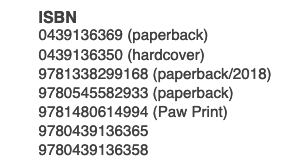
What isn't said here in so many words is that the ISBN does not define a specific content; it defines a  salable product instance in the same way that a UPS code is applied to different sizes and "flavors" of Dawn dish soap. What many people either do not know or may have forgotten is that every book product is given a different ISBN. This means that the hardback book, the trade paperback, the mass-market paperback, the MOBI ebook, the EPUB ebook, even if all brought to market by a single publisher, all have different ISBNs.  

The word "book" is far from precise and it is a shame that the ISBN uses that term. Yes, it is applied to the book trade, but it is not applied to a "book" except in a common sense of that word. When you say "I read a book" you do not often mean the same thing as the B in ISBN. Your listener has no idea if you are referring to a hard back or a paperback copy of the text. It would be useful to think of the ISBN as the ISBpN - the International Standard Book product Number.

Emphasizing the ISBN's use as a product code, bookstores at one point were assigning ISBNs to non-book products like stuffed animals and other gift items. This was because the retail system that the stores used required ISBNs. I believe that this practice has been quashed, but it does illustrate that the ISBN is merely a bar code at a sales point.

1970

The ISBN became a standard product number in the book trade in 1970, in the era when the Universal Product Code (UPC) concept was being developed in a variety of sales environments. This means that every book product that appeared on the market before that date does not have an ISBN. This doesn't mean that a text from before that date cannot have an ISBN - as older works are re-issued for the current market, they, too, are given ISBNs as they are prepared for the retail environment. Even some works that are out of copyright (pre-1925) may be found to have ISBNs when they have been reissued. 

The existence of an ISBN on the physical or electronic version of a book tells you nothing about its copyright status and does not mean that the book content is currently in print. It has the same meaning as the bar code on your box of cereal - it is a product identifier that can be used in automated systems to ring up a purchase. 

The Controlled Digital Lending Lawsuit

The lawsuit between a group of publishers led by Hachette and the Internet Archive is an example of two different views: that of selling and that of reading.


In the lawsuit the publishers quantify the damage done to them by expressing the damage to them in terms of numbers of ISBNs. This Implies that the lawsuit is not including back titles that are pre-ISBN. Because the concern is economic, items that are long out of print don't seem to be included in the lawsuit.

The difference between the book as product and the book as content shows up in how ISBNs are used. The publisher’s expert notes that many metadata records at the archive have multiple ISBNs and surmises that the archive is adding these to the records. What this person doesn’t know is that library records, which the archive is using, often contain ISBNs for multiple book products which the libraries consider interchangeable. The library user is seeking specific content and is not concerned with whether the book is a hard back, has library binding, or is one of the possible soft covers. The “book “ that the library user is seeking is an information vessel.

It is the practice in libraries, where there is more than one physical book type available, to show the user a single metadata record that doesn’t distinguish between them. The record may describe a hard bound copy even though the library has only the trade paperback. This may not be ideal but the cost-benefit seems defensible. Users probably pay little attention to the publication details that would distinguish between these products. 


From a single library metadata record


Where libraries do differentiate is between forms that require special hardware or software. Even here however the ISBN cannot be used for the library’s purpose because services that manage these materials can provide the books in the primary digital reading formats based off a single metadata record, even though each ebook format is assigned its own ISBN for the purpose of sales.

The product view is what you see on Amazon. The different products have different prices which is one way they are distinguished. A buyer can see the different prices for hard copy, paperback, or kindle book, and often a range of prices for used copies. Unlike the library user, the Amazon customer has to make a choice, even if all of the options have the same content. For sales to be possible, each of the products has its own ISBN. 

Different products have different prices


Counting ISBNs may be the correct quantifier for the publishers, but they feature only minimally in the library environment. Multiple ISBNs on a single library metadata record is not an attempt to hide publisher products by putting them together; it's good library practice for serving its readers. Users coming to the library with an ISBN will be directed to the content they seek regardless of the particular binding the library owns. Counting the ISBNs in the Internet Archive's metadata will not be a good measure of the number of "books" there using the publisher's definition of "book."


Digital Object Identifier (DOI)


I haven't done a deep study of the use of DOIs, but again there seems to be a great enthusiasm for the DOI as an identifier yet I see little discussion of the limitations of its reach. DOI began in 2000 so it has a serious time limit. Although it has caught on big with academic and scientific publications, it has less reach with social sciences, political writing, and other journalism. Periodicals that do not use DOIs may well be covering topics that can also be found in the DOI-verse. Basing an article research system on the presence of DOIs is an arbitrary truncation of the knowledge universe.


The End


Identifiers are useful. Created works are messy. Metadata is often inadequate. As anyone who has tried to match up metadata from multiple sources knows, working without identifiers makes that task much more  difficult. However, we must be very clear, when using identifiers, to recognize what they identify.


Wednesday, January 26, 2022

What's in a Name?

This is an essay about the forms of names and their representation in metadata. It is not by any means complete, nor am I an expert in this very complex area. These are my observations and a few suggestions for future work. All comments welcome.

[Because this is huge, and printing from here is oddly difficult, here's a PDF.]

If you do anything online, and surely you do, you have filled in countless forms with your name and address. Within the Western and English-speaking world, these have some minor (and occasionally annoying) variations. You might be asked for a first name and last name, or a given name and a family name, or just a name in a particular order.


There are variations, of course. Some recognize the practice of giving a person a "middle" name, that is a second, and perhaps secondary, additional name.

Because these forms are often used in commercial sites and the companies wish to have a polite relationship with their customers, you might be asked about your preferred form of address. 

These forms of address have cultural significance, and the list itself can reveal quite a bit about a culture. This is the list from the British Airways site:

We'll come back to some of these below.

The above examples come from commerce sites. The use of names at those sites are mostly social. Even on a site like a bank, the name has only a minor role in regards to identification because security relies on user names, passwords, and two-factor identification. Names themselves are  poor identifiers because they are far from unique across a population. Even if you think you have an unusual name, you will find others with your name in the vastness of the Internet.*

If you think about times that you've been on the phone with some bank or service, they invariably ask you to provide a telephone number, an email address, or a unique identifier like a social security number as a way to identify you. Only after they have located a record with that identifier do they use your name as both a confirmation that you've given (and they've entered) the correct number, but also so that they can cheerily refer to you by your name.

Names in Cultural Heritage

Where commercial organizations use names to effect a relationship with their current customers, cultural heritage institutions have a different set of needs. They often cover not only names of modern persons but persons worldwide and of previous eras. An organization must be able to encode this full range of names in a way that is useful today but that is, to the extent possible, faithful to the cultural and historical context of the person. Royalty, religious figures, even characters in mythology all have a very tender place in their respective cultures. To treat them otherwise is to dismiss their cultural importance. You wouldn't want to provide metadata for Benedict XVI without also including that his title and his role in the church is "Pope". You most certainly would not simply name him "Joseph Ratzinger" unless you were giving a very specific, pre-Pope, context.  I don't know what name Queen Elizabeth II would provide when signing up for an Amazon account ("Elizabeth Windsor"?) as there is unlikely to be an input box appropriate for her royal name, but culturally and historically she is Elizabeth II, Queen of Great Britain.

There is also the question of giving people their due rank in whatever hierarchy the particular culture values. As you can see with the example above for the list of the titles offered by British Airlines, whereas US-based airlines limit the titles to Mr., Mrs., Ms. and Dr., that titles of nobility are important in the UK. We can presume that to "mis-title" a person would be a social faux pas in most cultures, but there is also a historical context included in titles that one would not want to lose.

The "firstname, lastname" Problem

Not all names fit the "firstname, lastname" model. A primary reason to identify these parts of names is to support displays in alphabetical order by the "last name". This assumes that the last name is a family name, and that common usage is to gather together all persons with that family name in a display. In reality, this singular "family name" is only one possible name pattern. 

As the term "family name" implies, this positions a person within a group of persons with a particular relationship. In the dominant Western world, the name is paternal and denotes a line of inheritance. But this is by no means the only name pattern that exists. There are cultures where the child's name includes the family names of both the mother and the father, and sometimes other ancestors in the family line. This is how Juan Rodríguez y García-Lozano and María de la Purificación Zapatero Valero, have a son named José Luis Rodríguez Zapatero. Treating "Rodríguez Zapatero" as the family name would not bring together the alphabetical entries of the father and son.

There are other cultures that have a given name and a patronymic. While a patronymic may look like a family name, it is not. The singer Björk may have seemed to be using a single name as part of her art, like Cher or Madonna, but in fact in the Icelandic culture persons are known by a single name. When a more precise designation is needed, that name is enhanced with a name based on the given name of their father. In this case, Björk has a more "official" name of Björk Guðmundsdóttir, which is "Björk daughter of Guðmundur". Her father's name was Guðmundur Gunnarsson, he being the son of Gunnar. The author Arnaldur Indriðason is "Arnaldur the son of Indriði." In this practice, creating an order based on the patronymic would result in just a jumble of individual parental names, and persons are almost always called solely by their "first-and-only" name.

Yet another exception to the firstname/lastname conundrum relates to the names of royalty as mentioned above. Charles, Prince of Wales is the son of Elizabeth II. Their names do not connect them which is somewhat ironic given how important family relationships are to royal lineage. Both are of the house of Windsor but you wouldn't know that from their names. Like a Pope, the cultural or political position in these cases outweighs the personal. In addition, the title by which someone is officially known can change over time, making identification even more confusing, with titles being inherited or bestowed as circumstances change. Some people hold a plethora of titles: in addition to Prince of Wales, Charles is Earl of Chester, Duke of Cornwall, Duke of Rothesay, Earl of Merioneth and Baron Greenwich. This is as bad as the name proliferation in Russian novels, and just as confusing.

And there are the "one name" instances.  We have historical figures with only a single name ("Homer", "Aesop") but there are also current cultures in which members have only one name.


Any metadata that strictly requires both a given name and a family name will be unable to accommodate these and it is not unusual for people with only one name to be required to provide a second name to conform to the given/family name expectation in other cultures. There may even be local traditions for how one invents such a name. Yet they would not use that invented name in their own home country.

Names and Language

It is hard to separate language from culture, but there are some name situations in which the name is translated into the "receiving" language. Catherine (the Great) is Catherine in French, Caterina in Italian, etc.  The same is true of Popes:

Papa Franciscus (Latin)

Papa Francesco (Italian)

Papa Francisco (Spanish)

Pope Francis (English)

Another twist is that scientists and other cognoscenti of the late medieval and early modern times communicated with each other in Latin, and, probably as a form of showing that they were members of this elite club, often converted their names to a Latin form. Thus, one Aldo Pio Manuzio, a Venetian scholar and a very early book printer, took the name Aldus Pius Manutius. Francis Bacon published his "Novum Organum" (which was in Latin) as "Franciscus Baconis". 

Things get doubly complex as people and their names move from one culture to another. Many people of Chinese origin reverse the order of their names from family name first then given name to the preferred order in Western countries that places the family name last. In some cases, as with science fiction author Liu Cixin, a change for the Western marketplace creates a bit of confusion for anyone wanting to correctly encode this Chinese name.
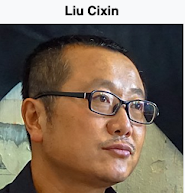

Note that his translator, Ken Liu, an American, uses the Western form of his own name. So this book cover is a good illustration of the name problem across cultures.

Names in Metadata

How we handle names in metadata design depends mainly on the intended application functions for the data. I give below some key functions that use names, but this is an incomplete list. I can see these four as key purposes for names and their encoding in metadata:

1. Display - Names get displayed in a number of different contexts, from phone books to faculty listings on a web site to conference name tags. Displays may use all or only part of a name, and there are a variety of ways that one can order the name parts.

2. Disambiguation - Which Mary Jones is this? How do I identify and find the one that I am looking for?

3. Addressing - We do want to address people appropriately, and we also want to talk about them appropriately.

4. Finding - Searching via keyword is without context, so I'll assume that all name forms can be searched in that way. I will describe "finding" as meaning a search for a specific, known name.

I'll trace these through some metadata schemas to illustrate the metadata capabilities one might have.

Library of Congress (and other libraries)

Libraries have been dealing with names and name forms for, well, forever; as long as there have been libraries. The set of rules for determining what name to enter for someone in the library catalog is many, many tens of pages long, and there are separate rules for personal names, corporate names, and family names. Yet library name practices have their limitations, in particular that names are entered as strings that are to be used to create a specific alphabetical sort order that begins with the surname, followed by a comma, and then the forename(s). 

Dempsey, Martin, 1904-
Dempsey, Martin E.
Dempsey, Mary.
Dempsey, Mary A.

Display by family name works well for Western names with family names, but not for Eastern names that place the family name first.

  Mao, Zedong

Following Chinese name practice his name would naturally be given as "Mao Zedong" because the family name is always given first. If one attempts to use the comma to revert names to their natural order, say from "Smith, Jane" to "Jane Smith" then you would also end up with "Zedong Mao" which is not correct in that cultural context. A culturally sensitive "natural order" display is not supported by this metadata. 

The primary display form is the Western one of lastname-comma-first names, but there are exceptions for entry by forename, which is given specific coding: 

Arnaldur Indriðason, 1961-
Homer

As I've shown in the Mao Zedong example, the encoding of name parts in library data does not provide what you might need to create other display forms. In the case of Arnaldur Indriðason, outside of the library need to alphabetize its entries, you may want to know that  Indriðason is a patronymic if you intend to use the name to address the person as he would be addressed in his culture. The example of "Mao, Zedong" is lacking the information that this is a name in a culture that regularly refers to people with their surname preceding their given name (and without a comma). You would want to know that this should be rendered as "Mao Zedong" when used in that context. 

As you can see in the examples above, the Library of Congress name practice goes beyond just the name and adds elements that are meant to inform and clarify. It includes dates (birth, death); titles and other terms associated with a name (Pope, Jr., illustrator); enumeration (II); and fuller form of the name, which fills in portions of the name that use initials ("Boyle, Timothy D. (Timothy Dale)").  Interestingly, the "III" in Pope Pius III is an enumeration, while the "III" in "John R Kennedy, III" is an "other term associated with a name." I'm going to guess that this primarily relates to the positioning of the "III" in the display. This illustrates a tension between identifying parts of the name and providing the desired display of those parts.

There is a another problem with "title and other terms" because it is a catchall element that doesn't distinguish between some very different types of data. The documentation lists:

  • titles designating rank, office, or nobility, e.g., Sir
  • terms of address, e.g., Mrs.
  • initials of an academic degree or denoting membership in an organization, e.g., F.L.A. 
  • a roman numeral used with a surname
  • other words or phrases associated with the name, e.g., clockmaker, Saint.

As you can see, some of these would display before the name in a "natural order" display:

  • Sir Paul McCartney
  • Mrs. Harriet Ward

While others display afterward:

  • John Kennedy, Jr.
  • John Kennedy, III

 And some can be either or both:

  • Dr. Paul Johnson, DDS
  • Dr. Sophie Jones, Ph.D., F.I.P.A.

There is always the need to disambiguate between people with the same name. Some of these "other terms"  work well in identifying a person:

Boyle, Tom (Professor)

Boyle, Tom (Spiritualist)

However, the clarification between identical names used most often in library name data is the dates of birth and death. These used to be included only when necessary to distinguish between identical names but the information is now included whenever it is available to the cataloger. This makes the dates an integral part of the name, much as the roman numerals of the names of Popes. 

Pius I, Pope, d. ca. 154 

Pius II, Pope, 1405-1464

Although perhaps once useful for the purpose of distinguishing otherwise identical names, the sheer number of people who are included in library catalogs has greatly limited the utility of these dates for disambiguation.

Kennedy, John, 1919-1945
Kennedy, John, 1921-
Kennedy, John, 1926-1994
Kennedy, John, 1928-
Kennedy, John, 1931-
Kennedy, John, 1931-2004
Kennedy, John, 1934-2012
Kennedy, John, 1939-
Kennedy, John, 1940-
Kennedy, John, 1947-
Kennedy, John, 1948-
Kennedy, John, 1951-
Kennedy, John, 1953-
Kennedy, John, 1956-
Kennedy, John, 1959-
Kennedy, John, 1963-
Kennedy, John, 1965-
Kennedy, John, 1973-
Kennedy, John, -1988.

There is provision for alternate versions of names in library practice although these reside in a separate file and are not always linked to the primary name in library databases.

Boyle, Thomas John
    see: Boyle, T. C. 

The library name practices, although probably the most detailed of any metadata name schemes, are not very generalizable; they serve one designated application, which is the alphabetical order of the entries in the library catalog. 

Dublin Core

Dublin Core is absolutely minimal when it comes to names, as "core" implies. It provides only one property, dct:creator, without further detail. It also does not distinguish between persons and organizations: both can be coded as "creator" with an implicit class of Agent. Any further intelligence must be provided elsewhere in a metadata scheme that makes use of Dublin Core.

Dublin Core does allow for the value of the dct:creator property to be either a literal or an IRI or Bnode, and the encoding of the value of the IRI could be a more precise name form. Using an IRI could also be a method for providing a unique identity for the creator.

FOAF

The "Friend of a Friend" vocabulary is about people, their names, and some modern social connectivity: email address, web site, etc. FOAF has three name properties:

  • foaf:name - which can be used to an entire name, undifferentiated in terms of types of name
  • foaf:familyName & foaf:givenName - intended to be used together (but with no mechanism to enforce that) this allows an obvious separation between the names. How they would display is left to the applications that make use of them. 

The  foaf:familyName and foaf:givenName cover a limited set of name forms. In the context of many online sites this may suffice, especially where there is no enforcement of "real" names. Given that FOAF was developed for use within and between online social sites, it avoids the need for historical forms of names.

All of these are defined as taking literal values, which we know does not provide an unambiguous identity for a person. There are properties defined in FOAF under the "Social Web" rubric, such as an email address, that should serve to disambiguate persons in a particular social context. These are not, however, part of the name itself.

schema.org

The vocabulary schema.org was developed to provide "structured data on the Internet". (This is exactly the original impetus behind Dublin Core. How that went south, and what schema.org attempts to do instead, is beyond this post.) The vocabulary listed under the person schema is extensive, although only a few elements are directly related to names:

sdo:familyName, sdo:givenName, sdo:additionalName

sdo:givenName, is defined as the "first name" and sdo:familyName, is defined as the "last name". sdo:additionalName, is "An additional name for a Person, can be used for a middle name".  This latter is highly flexible but at the same time non-specific. It also creates some confusion in terms of the order of names for anyone whose name does not fit the exact "first-middle-last" pattern. As shown above, it's not totally uncommon to have more than one name that can fit into any of those particular buckets. Presumably the properties are repeatable, but they are defined with the singular term "name". It also does not clarify a display order. 

sdo:givenName "T."
sdo:familyName "Boyle"
sdo:additionalName "C."

Schema.org does have properties for both pre-name and post-name honorifics. The examples given for these are: sdo:honorificPrefix (Dr., Mrs.); sdo:honorificSuffix (M.D., PhD).  These examples don't make it clear if it might be possible to encode:

sdo:givenName "Charles"
sdo:honorificSuffix "Prince of Wales"

or

sdo:givenName "Pius"
sdo:honorificPrefix "Pope"
sdo:honorificSuffix "II"

In any case it appears that this would not distinguish between the informal honorifics like "Esq." and those that are essential parts of the name such as titles of nobility. There also does not seem to be an obvious way to encode non-honorific suffixes, such as "Jr." or "III". 

Without some strong guidance, it would be hard to know which of these properties would be used for the parts of a name like María de la Purificación Zapatero Valero. We'll see a possible solution to this with Wikidata, below.

Wikipedia

Wikipedia has probably millions of articles for people and therefore has to deal with the question of names. Their search does not distinguish between names and other article topics, and all are searched in left-to-right natural order in a drop-down box. Names are article titles just as any topic can be an article title.

There is no special coding of the name or parts of the name - it is simply a string of characters. Where more than one person has the same name article creators must add something to disambiguate the name which is usually done by adding an area of activity and perhaps a location associated with that activity:


Wikipedia also has a special type of page where topics that have common terms, including names, can be further defined.

 
These pages allow an explanation to distinguish between people who share a name. It goes beyond the parenthetical phrases that are used to create unique article names for persons with the same name, and is much more human-friendly than the birth and death dates that library cataloging relies on. Yet while Wikipedia excels in disambiguation, its encoding for names is limited to a single property, "name", in the infobox for a person, although it also allows for honorifics and for alternative forms of the name. 
 

Because the various Wikipedias are divided by language, there are properties for translations and transliterations of names, and it allows for name changes over the course of a person's life. 

Wikidata

Wikidata began by extracting data points from the Wikipedia entries, primarily from the infoboxes, but has grown beyond that to a database of facts that is edited directly. Perhaps because it is massively crowd-sourced, a long list of name properties have been developed. In addition to the usual given name and family name  there are terms like demonym (a name representing a place), second family name in Spanish name, Roman cognomen (ancient surname), patronym or matronym (names representing the person's father or mother), first family name in Portuguese name, and many others. 

Also because it is crowd-sourced there should be no expectation that this list is complete or balanced. It most likely represents a modicum of self-interest on the part of participants.

Conclusion (?)

Any solution in this area needs to recognize that one size does not fit all. For some applications a single "name=[string]" will be sufficient and it would be seriously counter-productive to force those folks to engage in detailed encoding. Another barrier to detailed encoding is that few people have knowledge to encode the universe of name forms at a detailed level. Requiring metadata creators to make distinctions outside of their understanding would only result in error-ridden metadata. Better a blind single string than mis-coded details. Yet there will be applications and their metadata communities that can or must make use of the subtleties of name details that are not of interest to others.

Because of both the great variety of name forms and the variability of applications that make use of names, I recommend a metadata vocabulary that follows the principle of minimum semantic commitment. This means a vocabulary that includes broad classes and properties that can be used as is where detailed coding is not needed or desired, but which can be extended to accommodate many different contexts.

The trick then is to define broad classes that aid in defining semantics but do little restriction. Classes for things like "Agent", with subclasses for "Person", "Groups of Persons", and perhaps "Non-persons". Properties could begin with "name" which could be subdivided into any definable part of a name that people find useful. Further specificity can be provided by application profiles that define such requirements as cardinality or value types for the various properties. Applications themselves could contain rules for the displays that are needed for their use cases.

The challenge now is to find a standards group that is interested to take this on.

-------

* With perhaps a few exceptions. I once heard Lorcan Dempsey opine that person's names would be much more useful if parents would just give their children unique names, "... like Lorcan Dempsey."


Thursday, June 25, 2020

Women designing


Those of us in the library community are generally aware of our premier "designing woman," the so-called "Mother of MARC," Henriette Avram. Avram designed the MAchine Reading Cataloging record in the mid-1960's, a record format that is still being used today. MARC was way ahead of its time using variable length data fields and a unique character set that was sufficient for most European languages, all thanks to Avram's vision and skill. I'd like to introduce you here to some of the designing women of the University of California library automation project, the project that created one of the first online catalogs in the beginning of the 1980's, MELVYL. Briefly, MELVYL was a union catalog that combined data from the libraries of the nine (at that time) University of California campuses. It was first brought up as a test system in 1980 and went "live" to the campuses in 1982.

Work on the catalog began in or around 1980, and various designs were put forward and tested. Key designers were Linda Gallaher-Brown, who had one of the first masters degrees in computer science from UCLA, and Kathy Klemperer, who like many of us was a librarian turned systems designer.

We were struggling with how to create a functional relational database of bibliographic data (as defined by the MARC record) with computing resources that today would seem laughable but were "cutting edge" for that time. I remember Linda remarking that during one of her school terms she returned to her studies to learn that the newer generation of computers would have this thing called an "operating system" and she thought "why would you need one?" By the time of this photo she had come to appreciate what an operating system could do for you. The one we used at the time was IBM's OS 360/370.

Kathy Klemperer was the creator of the database design diagrams that were so distinctive we called them "Klemperer-grams." Here's one from 1985:
MELVYL database design Klemperer-gram, 1985
Drawn and lettered by hand, not only did these describe a workable database design, they were impressively beautiful. Note that this not only predates the proposed 2009 RDA "database scenario" for a relational bibliographic design by 24 years, it provides a more detailed and most likely a more accurate such design.
RDA "Scenario 1" data design, 2009
In the early days of the catalog we had a separate file and interface for the cataloged serials based on a statewide project (including the California State Universities). Although it was possible to catalog serials in the MARC format, the systems that had the detailed information about which issues the libraries held was stored in serials control databases that were separate from the library catalog, and many serials were represented by crusty cards that had been created decades before library automation. The group below developed and managed the CALLS (California Academic Library List of Serials). Four of those pictured were programmers, two were serials data specialists, and four had library degrees. Obviously, these are overlapping sets. The project heads were Barbara Radke (right) and Theresa Montgomery (front, second from right).

At one point while I was still working on the MELVYL project, but probably around the very late 1990's or early 2000's, I gathered up some organization charts that had been issued over the years and quickly calculated that during its history the project the technical staff that had created this early marvel had varied from 3/4 to 2/3 female. I did some talks at various conferences in which I called MELVYL a system "created by women." At my retirement in 2003 I said the same thing in front of the entire current staff, and it was not well-received by all. In that audience was one well-known member of the profession who later declared that he felt women needed more mentoring in technology because he had always worked primarily with men, even though he had indeed worked in an organization with a predominantly female technical staff, and another colleague who was incredulous when I stated once that women are not a minority, but over 50% of the world's population. He just couldn't believe it.

While outright discrimination and harassment of women are issues that need to be addressed, the invisibility of women in the eyes of their colleagues and institutions is horribly damaging. There are many interesting projects, not the least the Wikipedia Women in Red, that aim to show that there is no lack of accomplished women in the world, it's the acknowledgment of their accomplishments that falls short. In the library profession we have many women whose stories are worth telling. Please, let's make sure that future generations know that they have foremothers to look to for inspiration.

Monday, May 25, 2020

1982

I've been trying to capture what I remember about the early days of library automation. Mostly my memory is about fun discoveries in my particular area (processing MARC records into the online catalog). I did run into an offprint of some articles in ITAL from 1982 (*) which provide very specific information about the technical environment, and I thought some folks might find that interesting. This refers to the University of California MELVYL union catalog, which at the time had about 800,000 records.

Operating system: IBM 360/370
Programming language: PL/I
CPU: 24 megabytes of memory
Storage: 22 disk drives, ~ 10 gigabytes
DBMS: ADABAS

The disk drives were each about the size of an industrial washing machine. In fact, we referred to the room that held them as "the laundromat."

Telecommunications was a big deal because there was no telecommunications network linking the libraries of the University of California. There wasn't even one connecting the campuses at all. The article talks about the various possibilities, from an X.25 network to the new TCP/IP protocol that allows "internetwork communication." The first network was a set of dedicated lines leased from the phone company that could transmit 120 characters per second (character = byte) to about 8 ASCII terminals at each campus over a 9600 baud line. There was a hope to be able to double the number of terminals.

In the speculation about the future, there was doubt that it would be possible to open up the library system to folks outside of the UC campuses, much less internationally. (MELVYL was one of the early libraries to be open access worldwide over the Internet, just a few years later.) It was also thought that libraries would charge other libraries to view their catalogs, kind of like an inter-library loan.

And for anyone who has an interest in Z39.50, one section of the article by David Shaughnessy and Clifford Lynch on telecommunications outlines a need for catalog-to-catalog communication which sounds very much like the first glimmer of that protocol.

-----

(*) Various authors in a special edition: (1982). In-Depth: University of California MELVYL. Information Technology and Libraries, 1(4)

I wish I could give a better citation but my offprint does not have page numbers and I can't find this indexed anywhere. (Cue here the usual irony that libraries are terrible at preserving their own story.)

Saturday, November 23, 2019

The Work

The word "work" generally means something brought about by human effort, and at times implies that this effort involves some level of creativity. We talk about "works of art" referring to paintings hanging on walls. The "works" of Beethoven are a large number of musical pieces that we may have heard. The "works" of Shakespeare are plays, in printed form but also performed. In these statements the "work" encompasses the whole of the thing referred to, from the intellectual content to the final presentation.

This is not the same use of the term as is found in the Library Reference Model (LRM). If you are unfamiliar with the LRM, it is the successor to FRBR (which I am assuming you have heard of) and it includes the basic concepts of work, expression, manifestation and item that were first introduced in that previous study. "Work," as used in the LRM is a concept designed for use in library cataloging data. It is narrower than the common use of the term illustrated in the previous paragraph and is defined thus:
Class: Work
Definition: An abstract notion of an artistic or intellectual creation.
In this definition the term only includes the idea of a non-corporeal conceptual entity, not the totality that would be implied in the phrase "the works of Shakespeare." That totality is described when the work is realized through an LRM-defined "expression" which in turn is produced in an LRM-defined "manifestation" with an LRM-defined "item" as its instance.* These four entities are generally referred to as a group with the acronym WEMI.

Because many in the library world are very familiar with the LRM definition of work, we have to use caution when using the word outside the specific LRM environment. In particular, we must not impose the LRM definition on uses of the work that are not intending that meaning. One should expect that the use of the LRM definition of work would be rarely found in any conversation that is not about the library cataloging model for which it was defined. However, it is harder to distinguish uses within the library world where one might expect the use to be adherent to the LRM.

To show this, I want to propose a particular use case. Let's say that a very large bibliographic database has many records of bibliographic description. The use case is that it is deemed to be easier for users to navigate that large database if they could get search results that cluster works rather than getting long lists of similar or nearly identical bibliographic items. Logically the cluster looks like this:


In data design, it will have a form something like this:


This is a great idea, and it does appear to have a similarity to the LRM definition of work: it is gathering those bibliographic entries that are judged to represent the same intellectual content. However, there are reasons why the LRM-defined work could not be used in this instance.

The first is that there is only one WEMI relationship for work, and that is from LRM work to LRM expression. Clearly the bibliographic records in this large library catalog are not LRM expressions; they are full bibliographic descriptions including, potentially, all of the entities defined in the LRM.

To this you might say: but there is expression data in the bibliographic record, so we can think of this work as linking to the expression data in that record. That leads us to the second reason: the entities of WEMI are defined as being disjoint. That means that no single "thing" can be more than one of those entities; nothing can be simultaneously a work and an expression, or any other combination of WEMI entities. So if the only link we have available in the model is from work to expression, unless we can somehow convince ourselves that the bibliographic record ONLY represents the expression (which it clearly does not since it has data elements from at least three of the LRM entities) any such link will violate the rule of disjointness.

Therefore, the work in our library system can have much in common with the conceptual definition of the LRM work, but it is not the same work entity as is defined in that model.

This brings me back to my earlier blog post with a proposal for a generalized definition of WEMI-like entities for created works.  The WEMI concepts are useful in practice, but the LRM model has some constraints that prevent some desirable uses of those entities. Providing unconstrained entities would expand the utility of the WEMI concepts both within the library community, as evidenced by the use case here, and in the non-library communities that I highlight in that previous blog post and in a slide presentation.

To be clear, "unconstrained" refers not only to the removal of the disjointness between entities, but also to allow the creation of links between the WEMI entities and non-WEMI entities, something that is not anticipated in the LRM. The work cluster of bibliographic records would need a general relationship, perhaps, as in the case of VIAF, linked through a shared cluster identifier and an entity type identifying the cluster as representing an unconstrained work.

----
* The other terms are defined in the LRM as:

Class: Expression
Definition: A realization of a single work usually in a physical form.

Class: Manifestation
Definition: The physical embodiment of one or more expressions.

Class: Item
Definition: An exemplar of a single manifestation.

Tuesday, August 14, 2018

Libraryland, We Have a Problem


The first rule of every multi-step program is to admit that you have a problem. I think it's time for us librarians to take step one and admit that we do have a problem.

The particular problem that I have in mind is the disconnect between library data and library systems in relation to the category of metadata that libraries call "headings." Headings are the strings in the library data that represent those entities that would be entry points in a linear catalog like a card catalog.

It pains me whenever I am an observer to cataloger discussions on the proper formation of headings for items that they are cataloging. The pain point is that I know that the value of those headings is completely lost in the library systems of today, and therefore there are countless hours of skilled cataloger time that are being wasted.

The Heading


Both book and card catalogs were catalogs of headings. The catalog entry was a heading followed by one or more bibliographic entries. Unfortunately, the headings serve multiple purposes, which is generally not a good data practice but is due to the need for parsimony in library data when that data was analog, as in book and card catalogs.

  • A heading is a unique character string for the "thing" – the person, the corporate body, the family – essentially an identifier.
Tolkien, J. R. R. (John Ronald Reuel), 1892-1973
  • It supports the selection of the entity in the catalog from among the choices that are presented (although in some cases the effectiveness of this is questionable)


  • It is an access point, intended to be the means of finding, within the catalog, those items held by the library that meet the need of the user.
  • It provides the sort order for the catalog entries (which is why you see inverted forms like "Tolkien, J. R. R.")
United States. Department of State. Bureau for Refugee Programs
United States. Department of State. Bureau of Administration
United States. Department of State. Bureau of Administration and Security
United States. Department of State. Bureau of African Affairs
    • That sort order, and those inverted headings, also have a purpose of collocation of entries by some measure of "likeness"
    Tolkien, J. R. R. (John Ronald Reuel), 1892-1973
    Tolkien Society
    Tolkien Trust
    The last three functions, providing a sort order, access, and collocation, have been lost in the online catalog. The reasons for this are many, but the main explanation is that keyword searching has replaced alphabetical browse as a way to locate items in a library catalog.

    The upshot is that many hours are spent during the cataloging process to formulate a left-anchored, alphabetically order-able heading that has no functionality in library catalogs other than as fodder for a context-less keyword search.

    Once a keyword search is done the resulting items are retrieved without any correlation to headings. It may not even be clear which headings one would use to create a useful order. The set of retrieved bibliographic resources from a single keyword search may not provide a coherent knowledge graph. Here's an illustration using the keyword "darwin":

    Gardiner, Anne.
    Melding of two spirits : from the "Yiminga" of the Tiwi to the "Yiminga" of Christianity / by Anne Gardiner ; art work by
    Darwin : State Library of the Northern Territory, 1993.
    Christianity--Australia--Northern Territory.
    Tiwi (Australian people)--Religion.
    Northern Territory--Religion.

    Crabb, William Darwin.
    Lyrics of the golden west. By W. D. Crabb.
    San Francisco, The Whitaker & Ray company, 1898
    West (U.S.)--Poetry.

    Darwin, Charles, 1809-1882.
    Origin of species by means of natural selection; or, The preservation of favored races in the struggle for life and The descent of man and selection in relation to sex, by Charles Darwin.
    New York, The Modern library [1936]
    Evolution (Biology)
    Natural selection.
    Heredity.
    Human evolution.

    Bear, Greg, 1951-
    Darwin's radio / Greg Bear.
    New York : Ballantine Books, 2003.
    Women molecular biologists--Fiction.
    DNA viruses--Fiction.

    No matter what you would choose as a heading on which to order these, it will not produce a sensible collocation that would give users some context to understand the meaning of this particular set of items – and that is because there is no meaning to this set of items, just a coincidence of things named "Darwin."

    Headings that have been chosen to be controlled strings should offer a more predictable user search experience than free text searching, but headings do not necessarily provide collocation. As an example, Wikipedia uses the names of its pages as headings, and there are some rules (or at least preferred practices) to make the headings sensible. A search in Wikipedia is a left-to-right search on a heading string that is presented as a drop-down list of a handful of headings that match the search string:


    Included in the headings in the drop-down are "see"-type terms that, when selected, take the user directly to the entry for the preferred term. If there is no one preferred term Wikipedia directs users to disambiguation pages to help users select among similar headings:


    The Wikipedia pages, however, only provide accidental collocation, not the more comprehensive collocation that libraries aim to attain. That library-designed collocation, however, is also the source of the inversion of headings, making those strings unnatural and unintuitive for users. Although the library headings are admirably rules based, they often use rules that will not be known to many users of the catalog, such as the difference in name headings with prepositions based on the language of the author. To search on these names, one therefore needs to know the language of the author and the rule that is applied to that language, something that I am quite sure we can assume is not common knowledge among catalog users.

    De la Cruz, Melissa
    Cervantes Saavedra, Miguel de
    I may be the only patron of my small library branch that has known to look for the mysteries by Icelandic author Arnaldur Indriðason under "A" not "I".

    What Is To Be Done?


    There isn't an easy (or perhaps not even a hard) answer. As long as humans use words to describe their queries we will have the problem that words and concepts, and words and relationships between concepts, do not neatly coincide.

    I see a few techniques that might be used if we wish to save collocation by heading. One would be to allow keyword searching but for the system to use that to suggest headings that then can be used to view collocated works. Some systems do allow users to retrieve headings by keyword, but headings, which are very terse, are often not self-explanatory without the items they describe. A browse of headings alone is much less helpful that the association of the heading with the bibliographic data it describes. Remember that headings were developed for the card catalog where they were printed on the same card that carried the bibliographic description.

    Another possible area of investigation would be to look to the classified catalog, a technique that has existed alongside alphabetical catalogs for centuries. The Decimal Classification of Dewey was a classified approach to knowledge with a language-based index (his "Relativ Index") to the classes. (It is odd that the current practice in US libraries is to have one classification for items on shelves and an unrelated heading system (LCSH) for subject access.)
    The classification provides the intellectual collocation that the headings themselves do not provide. The difficulty with this is that the classification collocates topically but, at least in its current form, does not collocate the name headings in the catalog that identify people and organizations as entities.

    Conclusion (sort of)

    Controlled headings as access points for library catalogs could provide better service than keyword search alone. How to make use of headings is a difficult question. The first issue is how to exploit the precision of headings while still allowing users to search on any terms that they have in mind. Keyword search is, from the user's point of view, frictionless. They don't have to think "what string would the library have used for this?".

    Collocation of items by topical sameness or other relationships (e.g. "named for", "subordinate to") is possibly the best service that libraries could provide, although it is very hard to do this through the mechanism of language strings. Dewey's original idea of a classified order with a language-based index is still a good one, although classifications are hard to maintain and hard to assign.

    If challenged to state what I think the library catalog should be, my answer would be that it should provide a useful order that illustrates one or more intellectual contexts that will help the user enter and navigate what the library has to offer. Unfortunately I can't say today how we could do that. Could we think about that together?

    Readings

    Dewey, Melvil. Decimal classification and relativ index for libraries, clippings, notes, etc. Edition 7. Lake Placid Club, NY., Forest Press, 1911. https://archive.org/details/decimalclassifi00dewegoog

    Shera, Jesse H, Margaret E. Egan, and Jeannette M. Lynn. The Classified Catalog: Basic Principles and Practices. Chicago, Ill: American Library Association, 1956


    Monday, August 06, 2018

    FRBR as a Data Model


    (I've been railing against FRBR since it was first introduced. It still confuses me some. I put out these ideas for discussion. If you disagree, please add your thoughts to this post.)

    I was recently speaking at a library conference in OSLO where I went through my criticisms of our cataloging models, and how they are not suited to the problems we need to solve today. I had my usual strong criticisms of FRBR and the IFLA LRM. However, when I finished speaking I was asked why I am so critical of those models, which means that I did not explain myself well. I am going to try again here, as clearly and succinctly as I can.

    Conflation of Conceptual Models with Data Models


    FRBR's main impact was that it provided a mental model of the bibliographic universe that reflects a conceptual view of the elements of descriptive cataloging. You will find nothing in FRBR that could not be found in standard library cataloging of the 1990's, which is when the FRBR model was developed. What FRBR adds to our understanding of bibliographic information is that it gives names and definitions to key concepts that had been implied but not fully articulated in library catalog data. If it had stopped there we would have had an interesting mental model that allows us to speak more precisely about catalogs and cataloging.

    Unfortunately, the use of diagrams that appear to define actual data models and the listing of entities and their attributes have led the library world down the wrong path, that of reading FRBR as the definition of a physical data model. Compounding this, the LRM goes down that path even further by claiming to be a structural model of bibliographic data, which implies that it is the structure for library catalog data. I maintain that the FRBR conceptual model should not be assumed to also be a model for bibliographic data in a machine-readable form. The main reason for this has to do with the functionality that library catalogs currently provide (and and what functions they may provide in the future). This is especially true in relation to what FRBR refers to as its Group 1 entities: work, expression, manifestation, and item.

    The model defined in the FRBR document presents an idealized view that does not reflect the functionality of bibliographic data in library catalogs nor likely system design. This is particularly obvious in the struggle to fit the reality of aggregate works into the Group 1 "structure," but it is true even for simple published resources. The remainder of this document attempts to explain the differences between the ideal and the real.

    The Catalog vs the Universe


    One of the unspoken assumptions in the FRBR document is that it poses its problems and solutions in the context of the larger bibliographic universe, not in terms of a library catalog. The idea of gathering all of the manifestations of an expression and all of the expressions of a work is not shown as contingent on the holdings of any particular library. Similarly, bibliographic relationships are presented as having an existence without addressing how those relationships would be handled when the related works are not available in a data set. This may be due to the fact that the FRBR working group was made up solely of representatives of large research libraries whose individual catalogs cover a significant swath of the bibliographic world. It may also have arisen from the fact that the FRBR working group was formed to address the exchange of data between national libraries, and thus was intended as a universal model. Note that no systems designers were involved in the development of FRBR to address issues that would come up in catalogs of various extents or types.

    The questions asked and answered by the working group were therefore not of the nature of "how would this work in a catalog?" and were more of the type "what is nature of bibliographic data?". The latter is a perfectly legitimate question for a study of the nature of bibliographic data, but that study cannot be assumed to answer the first question.

    Functionality


    Although the F in FRBR stands for "functional" FRBR does little to address the functionality of the library catalog. The user tasks find, identify, select and obtain (and now explore, added in the LRM) are not explained in terms of how the data aids those tasks; the FRBR document only lists which data elements are essential to each task. Computer system design, including the design of data structures, needs to go at least a step further in its definition of functions, which means not only which data elements are relevant, but the specific usage the data element is put to in an actual machine interaction with the user and services. A systems developer has to take into account precisely what needs to be done with the FRBR entities in all of the system functions, from input to search and display.

    (Note: I'm going to try to cover this better and to give examples in an upcoming post.)

    Analysis that is aimed at creating a bibliographic data format for a library catalog would take into account that providing user-facing information about work and expression is context-dependent based on the holdings of the individual library and on the needs of its users. It would also take into account the optional use of work and expression information in search and display, and possibly give alternate views to support different choices in catalog creation and deployment. Essentially, analysis for a catalog would take system functionality into account.

    There a lot of facts about the nature of computer-based catalogs have to be acknowledged: that users are no longer performing “find” in an alphabetical list of headings, but are performing keyword searches; that collocation based on work-ness is not a primary function of catalog displays; that a significant proportion of a bibliographic database consists of items with a single work-expression-manifestation grouping; and finally that there is an inconsistent application of work and expression information in today's data.

    In spite of nearly forty years of using library systems whose default search function is a single box in which users are asked to input query terms that will be searched as keywords taken from a combination of creator, title, and subject fields in the bibliographic record, the LRM doubles down on the status of textual headings as primary elements, aka: Nomen. Unfortunately it doesn't address the search function in any reasonable fashion, which is to say it doesn't give an indication of the role of Nomen in the find function. In fact, here is the sum total of what the LRM says about search:

    "To facilitate this task [find], the information system seeks to enable effective searching by offering appropriate search elements or functionality."


    That's all. As I said in my talk at Oslo, this is up there with the jokes about bad corporate mission statements, like: "We endeavor to enhance future value through intelligent paradigm implementation." First, no information system ineffective searching. Yet the phrase "effective searching" is meaningless in itself; without a definition of what is effective this is just a platitude. The same is true for "appropriate search elements": no one would suggest that a system should use inappropriate search elements, but defining appropriate search is not at all a simple task. In fact, I contend that one of the primary problems with today's library systems is that we specifically lack a definition of appropriate, effective search. This is rendered especially difficult because the data that we enter into our library systems is data that was designed for an entirely different technology: the physical card catalog, organized as headings in alphabetical order.

    One Record to Rule Them All


    Our actual experience regarding physical structures for bibliographic data should be sufficient proof that there is not one single solution. Although libraries today are consolidating around the MARC21 record format, primarily for economic reasons, there have been numerous physical formats in use that mostly adhere to the international standard of ISBD. In this same way, there can be multiple physical formats that adhere to the conceptual model expressed in the FRBR and LRM documents. We know this is the case by looking at the current bibliographic data, which includes varieties of MARC, ISBD, BIBFRAME, and others. Another option for surfacing information about works in catalogs could follow what OCLC seems to be developing, which is the creation of works through a clustering of single-entity records. In that model, a work is a cluster of expressions, and an expression is a cluster of manifestations. This model has the advantage that it does not require the cataloger to make decisions about work and expression statements before it is known if the resource will be the progenitor of a bibliographic family, or will stand alone. It also does not require the cataloger to have knowledge of the bibliographic universe beyond their own catalog.

    The key element of all of these, and countless other, solutions is that they can be faithful to the mental model of FRBR while also being functional and efficient as systems. We should also expect that the systems solutions to this problem space will not stay the same over time, since technology is in constant evolution.

    Summary


    I have identified here two quite fundamental areas where FRBR's analysis differs from the needs of system development: 1) the difference between conceptual and physical models and 2) the difference between the (theoretical) bibliographic universe and the functional library catalog. Neither of these are a criticism of FRBR as such, but they do serve as warnings about some widely held assumptions in the library world today, which is that of mistaking the FRBR entity model for a data and catalog design model. This is evident in the outcry over the design of the BIBFRAME model which uses a two-tiered bibliographic view and not the three-tiers of FRBR. The irony of that complaint is that at the very same time as those outcries, catalogers are using FRBR concepts (as embodied in RDA) while cataloging into the one-tiered data model of MARC, which includes all of the entities of FRBR in a single data record. While cataloging into MARC records may not be the best version of bibliographic data storage that we could come up with, we must acknowledge that there are many possible technology solutions that could allow the exercise of bibliographic control while making use of the concepts addressed in FRBR/LRM. Those solutions must be based as least as much on user needs in actual catalogs as on bibliographic theory.

    As a theory, FRBR posits an ideal bibliographic environment which is not the same as the one that is embodied in any library catalog. The diagrams in the FRBR and LRM documents show the structure of the mental model, but not library catalog data. Because the FRBR document does not address implementation of the model in a catalog, there is no test of how such a model does or does not reflect actual system design. The extrapolation from mental model to physical model is not provided in FRBR or the LRM, as neither addresses system functions and design, not even at a macro level.

    I have to wonder if FRBR/LRM shouldn't be considered a model for bibliography rather than library catalogs. Bibliography was once a common art in the world of letters but that has faded greatly over the last half century. Bibliography is not the same as catalog creation, but one could argue that libraries and librarians are the logical successors to the bibliographers of the past, and that a “universal bibliography” created under the auspices of libraries would provide an ideal context for the entries in the library catalog. This could allow users to view the offerings of a single library as a subset of a well-described world of resources, most of which can be accessed in other libraries and archives.
    ­