Showing posts with label DCMI. Show all posts

Wednesday, January 26, 2022

What's in a Name?

This is an essay about the forms of names and their representation in metadata. It is not by any means complete, nor am I an expert in this very complex area. These are my observations and a few suggestions for future work. All comments welcome.

[Because this is huge, and printing from here is oddly difficult, here's a PDF.]

If you do anything online, and surely you do, you have filled in countless forms with your name and address. Within the Western and English-speaking world, these have some minor (and occasionally annoying) variations. You might be asked for a first name and last name, or a given name and a family name, or just a name in a particular order.


There are variations, of course. Some recognize the practice of giving a person a "middle" name, that is a second, and perhaps secondary, additional name.

Because these forms are often used in commercial sites and the companies wish to have a polite relationship with their customers, you might be asked about your preferred form of address. 

These forms of address have cultural significance, and the list itself can reveal quite a bit about a culture. This is the list from the British Airways site:

We'll come back to some of these below.

The above examples come from commerce sites. The use of names at those sites are mostly social. Even on a site like a bank, the name has only a minor role in regards to identification because security relies on user names, passwords, and two-factor identification. Names themselves are  poor identifiers because they are far from unique across a population. Even if you think you have an unusual name, you will find others with your name in the vastness of the Internet.*

If you think about times that you've been on the phone with some bank or service, they invariably ask you to provide a telephone number, an email address, or a unique identifier like a social security number as a way to identify you. Only after they have located a record with that identifier do they use your name as both a confirmation that you've given (and they've entered) the correct number, but also so that they can cheerily refer to you by your name.

Names in Cultural Heritage

Where commercial organizations use names to effect a relationship with their current customers, cultural heritage institutions have a different set of needs. They often cover not only names of modern persons but persons worldwide and of previous eras. An organization must be able to encode this full range of names in a way that is useful today but that is, to the extent possible, faithful to the cultural and historical context of the person. Royalty, religious figures, even characters in mythology all have a very tender place in their respective cultures. To treat them otherwise is to dismiss their cultural importance. You wouldn't want to provide metadata for Benedict XVI without also including that his title and his role in the church is "Pope". You most certainly would not simply name him "Joseph Ratzinger" unless you were giving a very specific, pre-Pope, context.  I don't know what name Queen Elizabeth II would provide when signing up for an Amazon account ("Elizabeth Windsor"?) as there is unlikely to be an input box appropriate for her royal name, but culturally and historically she is Elizabeth II, Queen of Great Britain.

There is also the question of giving people their due rank in whatever hierarchy the particular culture values. As you can see with the example above for the list of the titles offered by British Airlines, whereas US-based airlines limit the titles to Mr., Mrs., Ms. and Dr., that titles of nobility are important in the UK. We can presume that to "mis-title" a person would be a social faux pas in most cultures, but there is also a historical context included in titles that one would not want to lose.

The "firstname, lastname" Problem

Not all names fit the "firstname, lastname" model. A primary reason to identify these parts of names is to support displays in alphabetical order by the "last name". This assumes that the last name is a family name, and that common usage is to gather together all persons with that family name in a display. In reality, this singular "family name" is only one possible name pattern. 

As the term "family name" implies, this positions a person within a group of persons with a particular relationship. In the dominant Western world, the name is paternal and denotes a line of inheritance. But this is by no means the only name pattern that exists. There are cultures where the child's name includes the family names of both the mother and the father, and sometimes other ancestors in the family line. This is how Juan Rodríguez y García-Lozano and María de la Purificación Zapatero Valero, have a son named José Luis Rodríguez Zapatero. Treating "Rodríguez Zapatero" as the family name would not bring together the alphabetical entries of the father and son.

There are other cultures that have a given name and a patronymic. While a patronymic may look like a family name, it is not. The singer Björk may have seemed to be using a single name as part of her art, like Cher or Madonna, but in fact in the Icelandic culture persons are known by a single name. When a more precise designation is needed, that name is enhanced with a name based on the given name of their father. In this case, Björk has a more "official" name of Björk Guðmundsdóttir, which is "Björk daughter of Guðmundur". Her father's name was Guðmundur Gunnarsson, he being the son of Gunnar. The author Arnaldur Indriðason is "Arnaldur the son of Indriði." In this practice, creating an order based on the patronymic would result in just a jumble of individual parental names, and persons are almost always called solely by their "first-and-only" name.

Yet another exception to the firstname/lastname conundrum relates to the names of royalty as mentioned above. Charles, Prince of Wales is the son of Elizabeth II. Their names do not connect them which is somewhat ironic given how important family relationships are to royal lineage. Both are of the house of Windsor but you wouldn't know that from their names. Like a Pope, the cultural or political position in these cases outweighs the personal. In addition, the title by which someone is officially known can change over time, making identification even more confusing, with titles being inherited or bestowed as circumstances change. Some people hold a plethora of titles: in addition to Prince of Wales, Charles is Earl of Chester, Duke of Cornwall, Duke of Rothesay, Earl of Merioneth and Baron Greenwich. This is as bad as the name proliferation in Russian novels, and just as confusing.

And there are the "one name" instances.  We have historical figures with only a single name ("Homer", "Aesop") but there are also current cultures in which members have only one name.


Any metadata that strictly requires both a given name and a family name will be unable to accommodate these and it is not unusual for people with only one name to be required to provide a second name to conform to the given/family name expectation in other cultures. There may even be local traditions for how one invents such a name. Yet they would not use that invented name in their own home country.

Names and Language

It is hard to separate language from culture, but there are some name situations in which the name is translated into the "receiving" language. Catherine (the Great) is Catherine in French, Caterina in Italian, etc.  The same is true of Popes:

Papa Franciscus (Latin)

Papa Francesco (Italian)

Papa Francisco (Spanish)

Pope Francis (English)

Another twist is that scientists and other cognoscenti of the late medieval and early modern times communicated with each other in Latin, and, probably as a form of showing that they were members of this elite club, often converted their names to a Latin form. Thus, one Aldo Pio Manuzio, a Venetian scholar and a very early book printer, took the name Aldus Pius Manutius. Francis Bacon published his "Novum Organum" (which was in Latin) as "Franciscus Baconis". 

Things get doubly complex as people and their names move from one culture to another. Many people of Chinese origin reverse the order of their names from family name first then given name to the preferred order in Western countries that places the family name last. In some cases, as with science fiction author Liu Cixin, a change for the Western marketplace creates a bit of confusion for anyone wanting to correctly encode this Chinese name.
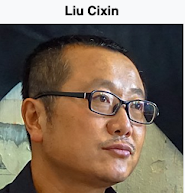

Note that his translator, Ken Liu, an American, uses the Western form of his own name. So this book cover is a good illustration of the name problem across cultures.

Names in Metadata

How we handle names in metadata design depends mainly on the intended application functions for the data. I give below some key functions that use names, but this is an incomplete list. I can see these four as key purposes for names and their encoding in metadata:

1. Display - Names get displayed in a number of different contexts, from phone books to faculty listings on a web site to conference name tags. Displays may use all or only part of a name, and there are a variety of ways that one can order the name parts.

2. Disambiguation - Which Mary Jones is this? How do I identify and find the one that I am looking for?

3. Addressing - We do want to address people appropriately, and we also want to talk about them appropriately.

4. Finding - Searching via keyword is without context, so I'll assume that all name forms can be searched in that way. I will describe "finding" as meaning a search for a specific, known name.

I'll trace these through some metadata schemas to illustrate the metadata capabilities one might have.

Library of Congress (and other libraries)

Libraries have been dealing with names and name forms for, well, forever; as long as there have been libraries. The set of rules for determining what name to enter for someone in the library catalog is many, many tens of pages long, and there are separate rules for personal names, corporate names, and family names. Yet library name practices have their limitations, in particular that names are entered as strings that are to be used to create a specific alphabetical sort order that begins with the surname, followed by a comma, and then the forename(s). 

Dempsey, Martin, 1904-
Dempsey, Martin E.
Dempsey, Mary.
Dempsey, Mary A.

Display by family name works well for Western names with family names, but not for Eastern names that place the family name first.

  Mao, Zedong

Following Chinese name practice his name would naturally be given as "Mao Zedong" because the family name is always given first. If one attempts to use the comma to revert names to their natural order, say from "Smith, Jane" to "Jane Smith" then you would also end up with "Zedong Mao" which is not correct in that cultural context. A culturally sensitive "natural order" display is not supported by this metadata. 

The primary display form is the Western one of lastname-comma-first names, but there are exceptions for entry by forename, which is given specific coding: 

Arnaldur Indriðason, 1961-
Homer

As I've shown in the Mao Zedong example, the encoding of name parts in library data does not provide what you might need to create other display forms. In the case of Arnaldur Indriðason, outside of the library need to alphabetize its entries, you may want to know that  Indriðason is a patronymic if you intend to use the name to address the person as he would be addressed in his culture. The example of "Mao, Zedong" is lacking the information that this is a name in a culture that regularly refers to people with their surname preceding their given name (and without a comma). You would want to know that this should be rendered as "Mao Zedong" when used in that context. 

As you can see in the examples above, the Library of Congress name practice goes beyond just the name and adds elements that are meant to inform and clarify. It includes dates (birth, death); titles and other terms associated with a name (Pope, Jr., illustrator); enumeration (II); and fuller form of the name, which fills in portions of the name that use initials ("Boyle, Timothy D. (Timothy Dale)").  Interestingly, the "III" in Pope Pius III is an enumeration, while the "III" in "John R Kennedy, III" is an "other term associated with a name." I'm going to guess that this primarily relates to the positioning of the "III" in the display. This illustrates a tension between identifying parts of the name and providing the desired display of those parts.

There is a another problem with "title and other terms" because it is a catchall element that doesn't distinguish between some very different types of data. The documentation lists:

  • titles designating rank, office, or nobility, e.g., Sir
  • terms of address, e.g., Mrs.
  • initials of an academic degree or denoting membership in an organization, e.g., F.L.A. 
  • a roman numeral used with a surname
  • other words or phrases associated with the name, e.g., clockmaker, Saint.

As you can see, some of these would display before the name in a "natural order" display:

  • Sir Paul McCartney
  • Mrs. Harriet Ward

While others display afterward:

  • John Kennedy, Jr.
  • John Kennedy, III

 And some can be either or both:

  • Dr. Paul Johnson, DDS
  • Dr. Sophie Jones, Ph.D., F.I.P.A.

There is always the need to disambiguate between people with the same name. Some of these "other terms"  work well in identifying a person:

Boyle, Tom (Professor)

Boyle, Tom (Spiritualist)

However, the clarification between identical names used most often in library name data is the dates of birth and death. These used to be included only when necessary to distinguish between identical names but the information is now included whenever it is available to the cataloger. This makes the dates an integral part of the name, much as the roman numerals of the names of Popes. 

Pius I, Pope, d. ca. 154 

Pius II, Pope, 1405-1464

Although perhaps once useful for the purpose of distinguishing otherwise identical names, the sheer number of people who are included in library catalogs has greatly limited the utility of these dates for disambiguation.

Kennedy, John, 1919-1945
Kennedy, John, 1921-
Kennedy, John, 1926-1994
Kennedy, John, 1928-
Kennedy, John, 1931-
Kennedy, John, 1931-2004
Kennedy, John, 1934-2012
Kennedy, John, 1939-
Kennedy, John, 1940-
Kennedy, John, 1947-
Kennedy, John, 1948-
Kennedy, John, 1951-
Kennedy, John, 1953-
Kennedy, John, 1956-
Kennedy, John, 1959-
Kennedy, John, 1963-
Kennedy, John, 1965-
Kennedy, John, 1973-
Kennedy, John, -1988.

There is provision for alternate versions of names in library practice although these reside in a separate file and are not always linked to the primary name in library databases.

Boyle, Thomas John
    see: Boyle, T. C. 

The library name practices, although probably the most detailed of any metadata name schemes, are not very generalizable; they serve one designated application, which is the alphabetical order of the entries in the library catalog. 

Dublin Core

Dublin Core is absolutely minimal when it comes to names, as "core" implies. It provides only one property, dct:creator, without further detail. It also does not distinguish between persons and organizations: both can be coded as "creator" with an implicit class of Agent. Any further intelligence must be provided elsewhere in a metadata scheme that makes use of Dublin Core.

Dublin Core does allow for the value of the dct:creator property to be either a literal or an IRI or Bnode, and the encoding of the value of the IRI could be a more precise name form. Using an IRI could also be a method for providing a unique identity for the creator.

FOAF

The "Friend of a Friend" vocabulary is about people, their names, and some modern social connectivity: email address, web site, etc. FOAF has three name properties:

  • foaf:name - which can be used to an entire name, undifferentiated in terms of types of name
  • foaf:familyName & foaf:givenName - intended to be used together (but with no mechanism to enforce that) this allows an obvious separation between the names. How they would display is left to the applications that make use of them. 

The  foaf:familyName and foaf:givenName cover a limited set of name forms. In the context of many online sites this may suffice, especially where there is no enforcement of "real" names. Given that FOAF was developed for use within and between online social sites, it avoids the need for historical forms of names.

All of these are defined as taking literal values, which we know does not provide an unambiguous identity for a person. There are properties defined in FOAF under the "Social Web" rubric, such as an email address, that should serve to disambiguate persons in a particular social context. These are not, however, part of the name itself.

schema.org

The vocabulary schema.org was developed to provide "structured data on the Internet". (This is exactly the original impetus behind Dublin Core. How that went south, and what schema.org attempts to do instead, is beyond this post.) The vocabulary listed under the person schema is extensive, although only a few elements are directly related to names:

sdo:familyName, sdo:givenName, sdo:additionalName

sdo:givenName, is defined as the "first name" and sdo:familyName, is defined as the "last name". sdo:additionalName, is "An additional name for a Person, can be used for a middle name".  This latter is highly flexible but at the same time non-specific. It also creates some confusion in terms of the order of names for anyone whose name does not fit the exact "first-middle-last" pattern. As shown above, it's not totally uncommon to have more than one name that can fit into any of those particular buckets. Presumably the properties are repeatable, but they are defined with the singular term "name". It also does not clarify a display order. 

sdo:givenName "T."
sdo:familyName "Boyle"
sdo:additionalName "C."

Schema.org does have properties for both pre-name and post-name honorifics. The examples given for these are: sdo:honorificPrefix (Dr., Mrs.); sdo:honorificSuffix (M.D., PhD).  These examples don't make it clear if it might be possible to encode:

sdo:givenName "Charles"
sdo:honorificSuffix "Prince of Wales"

or

sdo:givenName "Pius"
sdo:honorificPrefix "Pope"
sdo:honorificSuffix "II"

In any case it appears that this would not distinguish between the informal honorifics like "Esq." and those that are essential parts of the name such as titles of nobility. There also does not seem to be an obvious way to encode non-honorific suffixes, such as "Jr." or "III". 

Without some strong guidance, it would be hard to know which of these properties would be used for the parts of a name like María de la Purificación Zapatero Valero. We'll see a possible solution to this with Wikidata, below.

Wikipedia

Wikipedia has probably millions of articles for people and therefore has to deal with the question of names. Their search does not distinguish between names and other article topics, and all are searched in left-to-right natural order in a drop-down box. Names are article titles just as any topic can be an article title.

There is no special coding of the name or parts of the name - it is simply a string of characters. Where more than one person has the same name article creators must add something to disambiguate the name which is usually done by adding an area of activity and perhaps a location associated with that activity:


Wikipedia also has a special type of page where topics that have common terms, including names, can be further defined.

 
These pages allow an explanation to distinguish between people who share a name. It goes beyond the parenthetical phrases that are used to create unique article names for persons with the same name, and is much more human-friendly than the birth and death dates that library cataloging relies on. Yet while Wikipedia excels in disambiguation, its encoding for names is limited to a single property, "name", in the infobox for a person, although it also allows for honorifics and for alternative forms of the name. 
 

Because the various Wikipedias are divided by language, there are properties for translations and transliterations of names, and it allows for name changes over the course of a person's life. 

Wikidata

Wikidata began by extracting data points from the Wikipedia entries, primarily from the infoboxes, but has grown beyond that to a database of facts that is edited directly. Perhaps because it is massively crowd-sourced, a long list of name properties have been developed. In addition to the usual given name and family name  there are terms like demonym (a name representing a place), second family name in Spanish name, Roman cognomen (ancient surname), patronym or matronym (names representing the person's father or mother), first family name in Portuguese name, and many others. 

Also because it is crowd-sourced there should be no expectation that this list is complete or balanced. It most likely represents a modicum of self-interest on the part of participants.

Conclusion (?)

Any solution in this area needs to recognize that one size does not fit all. For some applications a single "name=[string]" will be sufficient and it would be seriously counter-productive to force those folks to engage in detailed encoding. Another barrier to detailed encoding is that few people have knowledge to encode the universe of name forms at a detailed level. Requiring metadata creators to make distinctions outside of their understanding would only result in error-ridden metadata. Better a blind single string than mis-coded details. Yet there will be applications and their metadata communities that can or must make use of the subtleties of name details that are not of interest to others.

Because of both the great variety of name forms and the variability of applications that make use of names, I recommend a metadata vocabulary that follows the principle of minimum semantic commitment. This means a vocabulary that includes broad classes and properties that can be used as is where detailed coding is not needed or desired, but which can be extended to accommodate many different contexts.

The trick then is to define broad classes that aid in defining semantics but do little restriction. Classes for things like "Agent", with subclasses for "Person", "Groups of Persons", and perhaps "Non-persons". Properties could begin with "name" which could be subdivided into any definable part of a name that people find useful. Further specificity can be provided by application profiles that define such requirements as cardinality or value types for the various properties. Applications themselves could contain rules for the displays that are needed for their use cases.

The challenge now is to find a standards group that is interested to take this on.

-------

* With perhaps a few exceptions. I once heard Lorcan Dempsey opine that person's names would be much more useful if parents would just give their children unique names, "... like Lorcan Dempsey."


Monday, January 28, 2019

FRBR without FR or BR

(This is something I started working on that turns out to be a "pulled thread" - something that keeps on unwinding the more I work on it. What's below is a summary, while I decide what to do with the longer piece.)

FRBR was developed for the specific purpose of modeling library catalog data. I give the backstory on FRBR in chapter 5 of my book, "FRBR Before and After." The most innovative aspect of FRBR was the development of a multi-entity view of creative works. Referred to as "group 1" of three groups of entities, the entities described there are Work, Expression, Manifestation, and Item (WEMI). They are aligned with specific bibliographic elements used in library catalogs, and are defined with a rigid structure: the entities are linked to each other in a single chain; the data elements are defined each as being valid for one and only one entity; all WEMI entities are disjoint.

In spite of these specifics, something in that group 1 has struck a chord for metadata designers who do not adhere to the library catalog model as described in FRBR. In fact, some mentions or uses of WEMI are not even bibliographic in nature.* This leads me to conclude that a version of WEMI that is not tied to library catalog concepts could provide an interesting core of classes for metadata that describes creative or created resources.

We already have some efforts that have stepped away from the specifics of FRBR. From 2005 there is the first RDF FRBR ontology, frbrCore, which defines the entities of FRBR and key relationships between them as RDF classes. This ontology breaks away from FRBR in that it creates super-classes that are not defined in FRBR, but it retains the disjointness between the primary entities. We also have FRBRoo which is a FRBR-ized version of the CIDOC museum metadata model. This extends the number of classes to include some that represent processes that are not in the static model of the library catalog. In addition we have FaBiO, a bibliographic ontology that uses frbrCore classes but extends the WEMI-based classes with dozens of sub-classes that represent types of works and expressions.

I conclude that there is something in the ability to describe the abstraction of work apart from the concrete item that is useful in many areas. The intermediate entities, defined in FRBR as expression and manifestation, may have a role depending on the material and the application for which the metadata is being developed. Other intermediate entities may be useful at times. But as a way to get started, we can define four entities (which are "classes" in RDF) that parallel the four group 1 entities in FRBR. I would like to give these new names to distance them from FRBR, but that may not be possible as people have already absorbed the FRBR terminology.


FRBR            /   option1 / option2
work               / idea        / creative work
expression      / creation  / realization
manifestation / object     / product
item                / instance / individual

My preferred rules for these classes are:
  • any entity can be iterative (e.g. a work of a work)
  • any entity can have relationships/links to any other entity
  • no entity has an inherent dependency on any other entity
  • any entity can be used alone or in concert with other entities
  • no entities are disjoint
  • anyone can define additional entities or subclasses   
  • individual profiles using the model may recommend or limit attributes and relationships, but the model itself will not have restrictions
This implements a a theory of ontology development known as "minimum semantic commitment." In this theory,  base vocabulary terms should be defined with as little semantics as possible, with semantics in this sense being the axiomatic semantics of RDF. An ontology whose terms have high semantic definition, such as the original FRBR, will provide fewer opportunities for re-use because uses must adhere to the tightly defined semantics in the original ontology. Less commitment in the base ontology means that there are greater opportunities for re-use; desired semantics can be defined in specific implementations through the creation of application profiles.

Given this freedom, how would people choose to describe creative works? For example, here's one possible way to describe a work of art:

work:
    title: Acrobats
    creator: Paul Klee
    genre: abstract art
    topic: acrobats
    date: 1914
item:
    size: 9 x 9
    base material: paper
    material: watercolor, pastel, ink
    color: mixed
    signed: PKlee
    dated: 1914
   
And here's a way to describe a museum store's inventory record for a print:

work:
    title: Acrobats
    creator: Paul Klee
    genre: abstract art
    topic: acrobats
    date: 1914
manifestation:
    description: 12-color archival inkjet print
    size: 24 x 36 inches
    price: $16.99
   
There is also no reason why a non-creative product couldn't use the manifestation class (which is one of the reasons that I would prefer to call it "product," which would resonate better for these potential users):

manifestation/product:
    description: dining chair
    dimensions: 26 x 23 x 21.5 inches
    weight:  21 pounds
    color: gray
    manufacturer: YEEFY
    price: $49.99
   
Here is the sum total of what this core WEMI would look like, still using the FRBR terminology:

<http://example.com/Work> rdf:type owl:Class ;
    rdfs:label "Work"@en ;
    rdfs:comment: "The creative work as abstraction."@en .

<http://example.com/Expression> rdf:type owl:Class ;
    rdfs:label "Expression"@en ;
    rdfs:comment: "The creative work as it is expressed in a potentially perceivable form."@en .

<http://example.com/Manifestation> rdf:type owl:Class ;                                                             rdfs:label "Manifestation"@en ;
    rdfs:comment: "The physical product that contains the creative work."@en .

<http://example.com/Item> rdf:type owl:Class ;
    rdfs:label "Item"@en ;
    rdfs:comment: "An instance or individual copy of the creative work."@en .

I can see communities like Dublin Core and schema.org as potential locations for these proposed classes because they represent general metadata communities, not just the GLAM world of IFLA. (I haven't approached them.) I'm open to hearing other ideas for hosting this, as well as comments on the ideas here. For it? Against it? Is there a downside?


* Examples of some "odd" references to FRBR for use in metadata for:

Monday, October 14, 2013

Who uses Dublin Core? - the original 15

The original 15 Dublin Core elements are included in the Dublin Core Metadata Terms using the namespace http://purl.org/dc/elements/1.1/. There is an "updated" version of each of the original terms in the namespace http://purl.org/dc/terms (dcterms). The difference is that the /dc/terms includes formal domains and ranges, in conformance with linked data standards; the original 15 elements in the /dc/elements/1.1/ namespace have no domain or range constraints defined. This means that the original 15, often given the namespace prefix of "dc:" or "dce:", are compatible with legacy uses of the Dublin Core elements.

In the first post of this series, I showed that the most used terms are from the dcterms vocabulary, followed immediately by a cluster of terms from the dce namespace. In addition, the majority of the top dcterms are the linked data equivalents of the dce terms, thus confirming the "coreness" of the original Dublin Core 15.

From this explanation one might expect that the uses of dce in the wilds linked data would be limited to legacy data. That does not, however, seem to be the case. Out of a total of 125 datasets from the Linked Open Vocabularies,  nearly half (60) use both the linked data vocabulary (dcterms) and the dce terms. Of the top five datasets with the greatest number of uses of dce, only one, "Wikipedia 3," does not also use the dcterms.

Europeana Linked Open Data 
Wikipedia 3 
Linked Open Data Camera dei deputati 
B3Kat - Library Union Catalogues of Bavaria, Berlin and Brandenburg 
Yovisto - academic video search 
 
There are reasons why datasets may use both "generations" of the Dublin Core vocabulary. One is that their data contains a mix of legacy metadata and linked data, either because the dataset has grown over time, or because the set combines data from different sources. Another is that there may be situations in which the dcterms use of domains and ranges is too restrictive for the needs of the data creators.

The LOV dataset of dce usage has over 24 million uses (compared to 192 million uses of dcterms). Library and bibliographic data is again by far the majority of the use, although it is rivaled by government data, in part because of the over 4 million uses contributed by the Italian Camera dei deputati, which also uses dcterms but to a lesser extent. In fact, government data is overall a strong contender in the dce space.

My overall conclusion from looking at this data is that Dublin Core is used widely for bibliographic and non-bibliographic data; that there is a new "core" based on usage that overlaps greatly with the old core; some dcterms elements are hardly used at all in these datasets; and finally that both the linked data dcterms and the legacy dce elements show themselves to be useful, even in the linked data environment.


Related posts:

Friday, October 11, 2013

Who uses Dublin Core - dcterms?

In my previous post I gave some data on Dublin Core field use. Today I look at who is using Dublin Core's dcterms vocabulary.

The LOV statistics show 212 datasets that use the vocabulary at http://purl.org/dc/terms/, and the number of instances of usage. I did some "back of the envelope" counts on what types of organizations or projects use the terms, and also the type of use. By these calculations, the highest use was from libraries (> 60%). The next highest use was in a single language study called Semantic Quran (~10%). Third was the use in government data at less than 1%.

If one looks at the type of data, bibliographic data makes up nearly 90% of the usage. In this category I included archives, eprint repositories, and a few databases of videos and teaching materials.

From this one might conclude that dcterms isn't used much outside of the bibliographic world, but in fact traditional libraries provide only 28 of the 212 datasets on this list. The range of users and uses is impressive. Here are a few to peak your interest:
  • Southampton University has a number of datasets of civic information, including a list of bus stops.
  • There is a biomedical data service called eagle-i used by 24 universities or departments that provides information on specimens, reagents and services. This contributes nearly 500,000 instance of dcterms usage.
  • The New York Times linked data service uses dcterms. This service consists of topics (persons, organizations, locations, topics) covered by the newspaper.
  • I've mentioned the Semantic Quran. This is a linguistic database consisting of 43 translations of the Quran. It contributes over 6 million instances of dcterms use.
  • There is government data covering a wide range of topic areas. By my estimate there are at least 70 sets of government data in this compilation (including international), with everything from the aforementioned bus stops to election data, patents, economic indicators and scientific information.
If one is to make conclusions from this evidence, it could be said that the dcterms vocabulary is a core vocabulary for the description of intellectual resources, such as the holdings of libraries and archives, but that it also provides functionality for a wide range of data types. 

There are also users of the original Dublin Core vocabulary, now referred to as "1.1". I will cover that usage next.

Wednesday, October 09, 2013

Dublin Core usage in LOD

Thanks to some projects that gather statistics on the growth of linked data, we can find out various interesting things about the vocabularies being used and the degree of linking between data sets from different communities. The data I report here comes from LODstats via the Linked Open Vocabularies (LOV) project.

The LOV project looks particularly at the interrelations between vocabularies. For example, it can show which vocabularies use terms from other vocabularies. This crossover of terms is one of the things that makes links between datasets possible. For example, this shows that the geoSpecies vocabulary is not itself referenced by other vocabularies, but can link through its use of vocabularies like FOAF and Dublin Core. You can watch the visualization grow here.
In contrast, this is what Dublin Core terms looks like at LOV:

With the animated visualization here.

Dublin Core does seem to have fulfilled its role as a core vocabulary that many different communities have found useful, at least in part. The set of terms often abbreviated as "dcterms" (or sometimes "dct") and whose namespace is http://purl.org/dc/terms/ has been used approximately 192 million times as reported in the LOD statistics. This is only the usage in the 2289 linked data datasets used by that project. The earlier set of Dublin Core terms, the original fifteen terms, whose namespace is http://purl.org/dc/elements/1.1/, has been used 24.2 million times. This gives us a total of 216 million uses of Dublin Core in this particular count.

The interesting question, then, is what parts of DC are heavily used? I have a sorted list, from most to least, of all terms in the http://purl.org/dc/ namespace. The top fifteen terms are all from the "dcterms" namespace:

count          term
24147876    subject
22575133    identifier
17120343    title
17065873    issued
14459601    publisher
11605978    language
9930733    medium
9795117    format
9792064    BibliographicResource
7700745    isPartOf
7371553    creator
7241777    contributor
6590791    description
6184994    type
5983236    extent

Of this list, only four were not part of the original "Dublin Core 15" vocabulary: issued, medium, BibliographicResource, and isPartOf. The terms of that original vocabulary cluster together beginning right after the last term in the above list. I believe this provides an interesting affirmation that the original fifteen terms were a fair definition of "core." 

However, these terms, in the "dcterms" namespace got less than ten uses, and some were even zero:

accrualPeriodicity
Frequency
AgentClass
dateSubmitted
isRequiredBy
Jurisdiction
LicenseDocument
LinguisticSystem
MediaType
MediaTypeOrExtent
PeriodOfTime
PhysicalResource
RightsStatement

The last term, which got zero in the LOD calculations, is particularly interesting because the element "rights" in the original "DC 15" got 398,361 uses, and is ranked 39th in the list of elements the overall http://purl.org/dc namespace.

Next, I'll take a quick look at which datasets are contributing to the use of Dublin Core terms, and who is creating those datasets.


Wednesday, January 11, 2012

Bibliographic Framework: RDF and Linked Data

With the newly developed enthusiasm for RDF as the basis for library bibliographic data we are seeing a number of efforts to transform library data into this modern, web-friendly format. This is a positive development in many ways, but we need to be careful to make this transition cleanly without bringing along baggage from our past.

Recent efforts have focused on translating library record formats into RDF with the result that we now have:
    ISBD in RDF
    FRBR in RDF
    RDA in RDF

and will soon have
    MODS in RDF

In addition there are various applications that convert MARC21 to RDF, although none is "official." That is, none has been endorsed by an appropriate standards body.

Each of these efforts takes a single library standard and, using RDF as its underlying technology, creates a full metadata schema that defines each element of the standard in RDF. The result is that we now have a series of RDF silos, each defining data elements as if they belong uniquely to that standard. We have, for example, at least four different declarations of "place of publication": in ISBD, RDA, FRBR and MODS, each with its own URI. There are some differences between them (e.g. RDA separates place of publication, manufacture, production while ISBD does not) but clearly they should descend from a common ancestor:
RDA: place of publication
RDA: place of distribution
RDA: place of manufacture
FRBRer: has place of publication or distribution
ISBD: has place of publication, production, distribution
This would be annoying, but not unworkable, if these different instances of "place of publication" could be treated as having some meaning in common such that one could link a FRBRer element to an ISBD element, but they cannot. The reason they cannot is that each of these constrains the elements in a particular way that defines its relationship to a single data context (what we generally think of as a "record structure"). The elements are not independent of that context, and this means that each can only be used within that particular context. This is the antithesis of the linked data concept, where data sets from diverse sources share metadata elements. It is this re-use of elements that creates the "link" in linked data. To achieve this, metadata elements need to be unconstrained by a particular context.

Linking can also be achieved through vertical relationships, similar to "broader" and "narrower" in thesauri. This is less direct, but makes it possible to mix data sets that have differing levels of granularity. In our case, the ISBD "place of publication, production, distribution" could be defined as broader to the three RDA elements that treat those separately. Unfortunately that is not possible because of the way that ISBD and RDA have been defined in RDF. (I'll post more detail about this later for those who want more.)

The result is that we now have a series of RDF silos, expressions of our data in RDF that lack the linking capabilities of linked data because they are bound to specific data structures. Clearly we gain little in terms of linked data by creating mutually incompatible bibliographic views. Not only are these RDF schemes not compatible with each other, none will be linkable to bibliographic data from communities outside of libraries who published their data on the Web. That means no linking to Amazon, to Wikipedia, to citations within documents.

Given where we are in the development of linked data for libraries, we now have two options:

1) Define 'super-elements' that float above the record formats and that are not bound by the constraints of the RDF-defined records. In this case there would be a general "place of publication" that is super- to all of the "place of publication" elements in the various records, and would be subordinate to a general concept of "place" that is widely used (possibly a property of GeoNames). To implement linking, each record element would be extrapolated to its super elements.

2) Define our data elements outside of any particular record format first, then use these in the record schemas. In this case there would be only one instance of "place of publication" and it would be used throughout the various bibliographic records whenever an element with that meaning is needed. Those records would be interchangeable as linked data using their component data elements, and would interact with other bibliographic data on the Web using the RDF-defined elements and their relationships.

My message here is that we need to be creating data, not records, and that we need to create the data first, then build records with it for those applications where records are needed. Those records will operate internally to library systems, while the data has the potential to make connections in linked data space. I would also suggest that we cease creating silo'd RDF record formats, as these will not move us forward. Instead, we should concentrate on discovering and defining the elements of our data, and begin looking outward at all of the data we want to link to in the vast information universe.


_____
* Note on RDA: RDA in RDF includes two "versions" of each data element: one bound to FRBR and one not. The latter has potential for re-use outside of a FRBR environment, and was designed for this purpose by the DCMI/RDA task force. Its relationship to "official" RDA is somewhat unclear at this time but hopefully will gain support as the linked data concept is absorbed into the bibliographic framework.